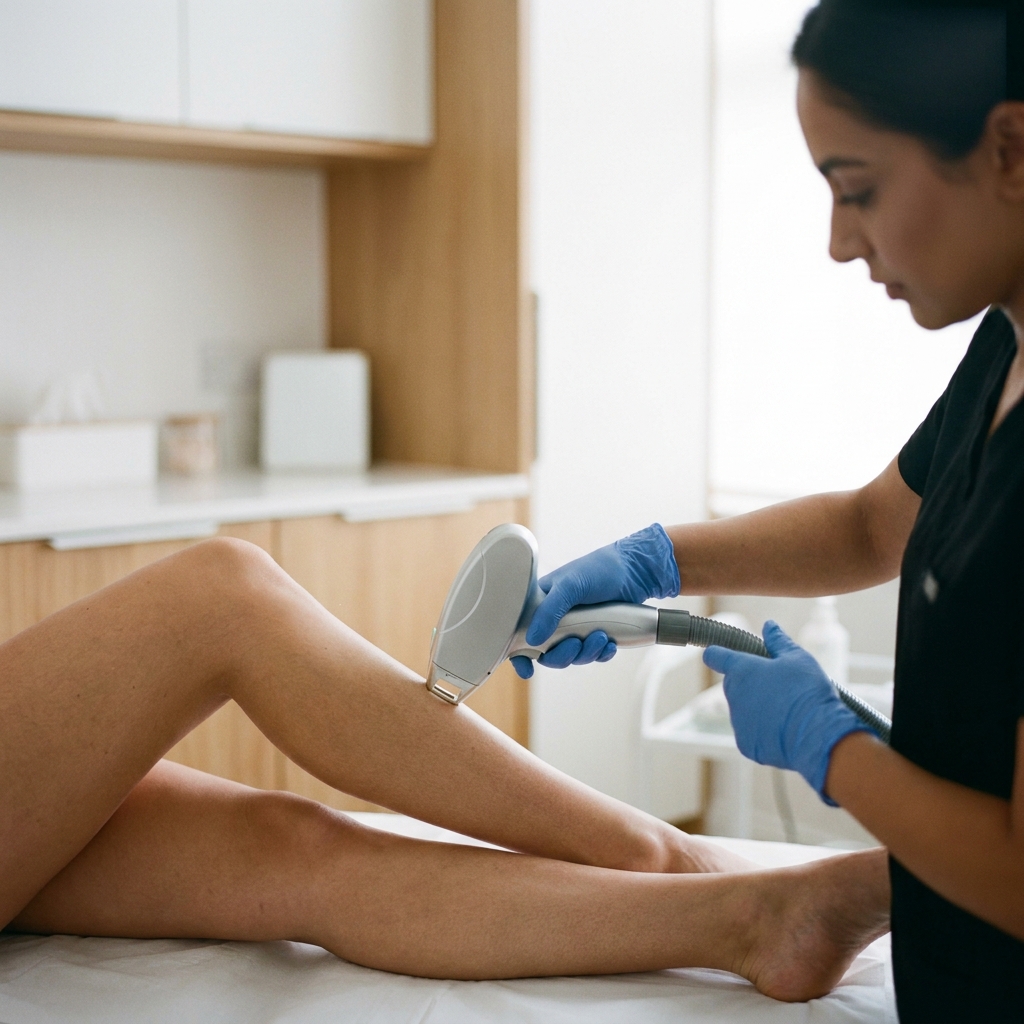
The short answer
The most common side effects are temporary: redness, mild swelling around the hair follicles and a sensation like mild sunburn for a few hours to a couple of days. Less commonly there can be blistering, crusting or changes in skin colour (lighter or darker patches). Rarely, when the wrong settings are used or the skin is tanned, burns, scarring or infection can occur. Most reactions are short-lived. Suitability and any skin reaction should be assessed by a qualified, regulated practitioner.
Laser hair removal is widely used and, in trained hands, most side effects are mild and temporary. But because the procedure deliberately heats the skin’s follicles, it is not risk-free — and understanding what is normal, what is uncommon and what is a warning sign helps you choose a clinic and look after your skin afterwards. This page sets out the common reactions, the rarer risks and when to seek help, drawing on NHS and MHRA guidance.
Side effects at a glance
- Most common Redness, swelling around follicles
- How long Hours to a couple of days, usually
- Less common Blistering, crusting, pigment change
- Rare Burns, scarring, infection
- Higher risk Tanned or darker skin with wrong settings
- Reduce risk Patch test, correct settings, cooling
Common, temporary side effects
For most people the side effects of laser hair removal are minor and settle quickly, often within the same day. The skin has just been heated to target the follicles, so a short-lived reaction is expected rather than a sign that something has gone wrong. The most common effects include:
- Redness (erythema) — the treated area often looks flushed or pink for a few hours afterwards.
- Swelling around the follicles — small raised bumps known as perifollicular oedema, which actually show that the follicles have absorbed the energy.
- A mild sunburn-like feeling — warmth and tenderness across the area that usually fades within a day or two.
- Temporary shedding — treated hairs often appear to keep growing for one to two weeks, then fall out as the skin naturally sheds them.
- Mild itching — some people notice transient itchiness as the skin settles, which gentle moisturising can ease.
Cool compresses and gentle aftercare ease all of these. Our aftercare guide and healing timeline explain what to expect day by day, and why the shedding phase is normal rather than regrowth.
Less common side effects
A smaller number of people experience stronger reactions. These are not the typical outcome, but they are recognised and worth knowing about so you can spot them:
| Effect | What it looks like |
|---|---|
| Blistering / crusting | Small fluid blisters or scabs over treated spots |
| Hyperpigmentation | Patches of darker skin, more common in darker tones |
| Hypopigmentation | Patches of lighter skin |
| Folliculitis | Inflamed, spotty follicles |
Pigment changes are usually temporary but can take weeks or even months to settle, and they are more likely on tanned or darker skin if the device is not matched to the skin tone. This is exactly why a careful skin-type assessment and the right choice of laser matter so much — see laser hair removal on different skin tones. A wider account of redness, bumps and pigment shifts is set out on our skin reactions page.
Rare but serious risks
Serious complications are uncommon when treatment is carried out competently, but they do exist and should be understood honestly. They include burns, scarring and skin infection, and they become more likely when settings are too aggressive, when the skin is tanned, or when an inexperienced operator treats darker skin with an unsuitable device. Eye injury is also a risk if proper protective goggles are not worn, which is why reputable clinics provide them for both client and operator at every session. Choosing a qualified, regulated practitioner who assesses your skin properly is the single most effective step in keeping these risks low; see is laser hair removal safe? for the full safety picture.
How side effects are minimised
Good practice removes most of the risk and keeps the common reactions mild:
- A consultation and patch test before your first full session, to check how your skin responds.
- Correct device and energy settings matched to your skin tone and hair type.
- Effective skin cooling during treatment.
- Avoiding sun, sunbeds and fake tan before and after, which reduces burn and pigment risk — see sun exposure.
- Following aftercare advice and spacing sessions four to eight weeks apart to let the skin recover.
This page is general information, not medical advice. Reactions vary from person to person, so any concern about a side effect should be raised promptly with a qualified, regulated practitioner, your GP, or in an emergency NHS urgent care. A patch test and consultation before treatment remain essential, and results vary by individual.
Frequently asked questions
How long do side effects last?
Common redness and swelling usually settle within hours to a couple of days. Pigment changes, if they occur, can take longer — sometimes weeks or months — and should be assessed if they persist.
Can laser hair removal cause permanent skin damage?
It is rare with competent treatment, but scarring and lasting pigment change are possible, particularly with the wrong settings or on tanned skin. Choosing a qualified practitioner and avoiding sun greatly reduces the risk.
Is some redness normal?
Yes. Mild redness and small bumps around the follicles immediately after treatment are expected and usually fade quickly. A cool compress helps.
Should I be worried about pigment changes?
Most are temporary, but you should tell your practitioner about any darkening or lightening of the skin so they can adjust treatment and advise you. Avoiding sun exposure helps prevent them.
Sources & further reading
- NHS — Laser hair removal: risks and what to consider
- MHRA — Lasers, IPL and LED equipment used for cosmetic procedures
- NHS — Skin pigmentation and sun protection
- JCCP — Patient safety guidance for non-surgical cosmetic procedures
This guide is general information, not medical advice. A patch test and consultation with a qualified, regulated practitioner are essential before treatment, and results vary by individual. Laser achieves long-term hair reduction, not guaranteed permanent removal of every hair. Discuss any skin or health concerns with the practitioner or your GP.