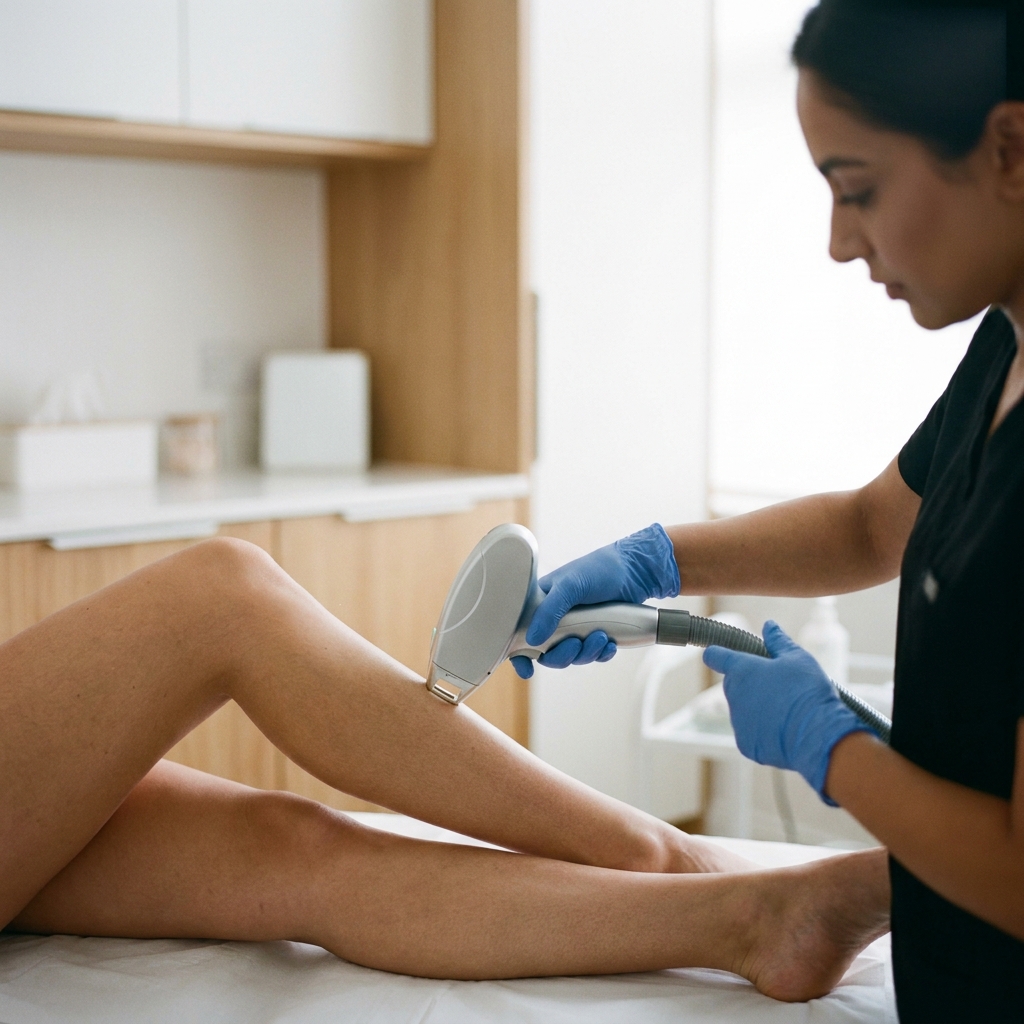
The short answer
For most people the visible reaction settles within a day or two: redness and small bumps fade, and the skin returns to normal. Treated hairs then shed over the following one to two weeks. Stronger reactions such as crusting take longer, and pigment changes can persist for weeks. Sessions are spaced four to eight weeks apart partly to let skin recover and to catch follicles entering the active growth phase. Healing varies between individuals, so follow your practitioner’s advice.
Laser hair removal is not a wound-healing procedure in the way surgery is, but the skin does need a short recovery after each session, and the visible ‘result’ unfolds over a couple of weeks as treated hairs shed. Knowing the timeline helps you tell normal recovery from a reaction that needs attention, and explains why sessions are spaced several weeks apart. This page sets out what typically happens and when.
Healing at a glance
- Redness fades Usually within hours to 2 days
- Bumps settle Within a day or two
- Hairs shed Over 1–2 weeks
- Crusting Takes a little longer; do not pick
- Pigment changes Can take weeks to settle
- Between sessions Typically 4–8 weeks
A typical healing timeline
Laser hair removal is not a wound-healing procedure in the way surgery is, but the skin does need a short recovery after each session, and the visible result then unfolds over a couple of weeks as treated hairs shed. A typical pattern looks like this:
| When | What usually happens |
|---|---|
| First few hours | Redness, warmth, small bumps around follicles |
| Day 1–2 | Redness and swelling settle; skin feels normal |
| Day 3–14 | Treated hairs shed as the skin renews |
| Weeks 2–4 | Area looks clear; some regrowth may appear |
| Weeks 4–8 | Next session as new follicles become active |
This is a guide, not a guarantee — everyone heals at their own pace, and larger or more sensitive areas such as the face or bikini line may take a little longer to settle than the arms or legs. Stronger reactions naturally take more time, and any crusting should be allowed to come away on its own.
What helps the skin recover
Recovery is mostly about being gentle and protecting the area while it settles:
- Cooling in the first hours to ease redness and warmth.
- Gentle, fragrance-free moisturiser if your practitioner recommends it.
- Sun protection with daily SPF, which also helps prevent pigment changes; see sun exposure.
- Avoiding heat, friction and exfoliation until the area has fully settled.
- Leaving shedding hairs and any scabs alone — picking slows healing and risks scarring or infection.
Our full aftercare guide covers each of these in more detail, and the side effects page explains the common reactions you may notice as the skin recovers.
Why sessions are spaced weeks apart
Hair grows in cycles, and the laser only affects follicles that are in their active growth phase at the time of treatment. Spacing sessions four to eight weeks apart lets the skin recover fully and allows more follicles to enter that active phase, so each session catches new hairs the previous one could not. A typical course is six to eight sessions, sometimes more, with occasional maintenance afterwards; see also session spacing for why the gaps are not arbitrary.
What can slow healing down?
Most people heal without any trouble, but a few habits can slow recovery or raise the risk of marks. Picking at shedding hairs or scabs is the most common — it interrupts the skin’s natural repair and can lead to scarring or infection. Sun exposure on freshly treated skin can cause pigment changes and should be avoided, with daily SPF on exposed areas; see sun exposure. Heat and friction, from hot baths, saunas, intense exercise or tight clothing, can keep the area inflamed for longer, and harsh or perfumed products can irritate it. Being gentle and patient in the first few days is usually all that is needed for a smooth recovery, and the side effects page covers the normal reactions to expect along the way.
When healing is not going to plan
Most recovery is uneventful and needs nothing more than gentle care. Contact your practitioner or a GP if redness is worsening rather than settling, if blistering, crusting or weeping develops, if there are signs of infection, or if pigment changes are not improving over time. These are not typical and should be assessed promptly. This page is general information, not medical advice; healing varies by individual, so follow your practitioner’s tailored advice and have a consultation and patch test before your first full session.
Frequently asked questions
How long until my skin looks normal after a session?
For most people redness and bumps settle within hours to a day or two. Larger or more sensitive areas can take a little longer, and stronger reactions such as crusting take more time.
Is it normal for hair to grow after treatment?
Treated hairs often appear to keep growing for one to two weeks before shedding as the skin renews. This shedding is normal — do not pluck the hairs.
Why do I have to wait weeks between sessions?
The laser only affects follicles in their active growth phase. Waiting four to eight weeks lets the skin recover and allows new follicles to become active so the next session catches more hairs.
What slows down healing?
Picking at hairs or scabs, sun exposure, heat and friction, and harsh products can all slow recovery and raise the risk of pigment change or scarring. Be gentle and protect the area.
Sources & further reading
- NHS — Laser hair removal recovery and aftercare
- NHS — Sun safety and protecting healing skin
- MHRA — Cosmetic laser and IPL guidance
- JCCP — Recovery and aftercare information for patients
This guide is general information, not medical advice. A patch test and consultation with a qualified, regulated practitioner are essential before treatment, and results vary by individual. Laser achieves long-term hair reduction, not guaranteed permanent removal of every hair. Discuss any skin or health concerns with the practitioner or your GP.