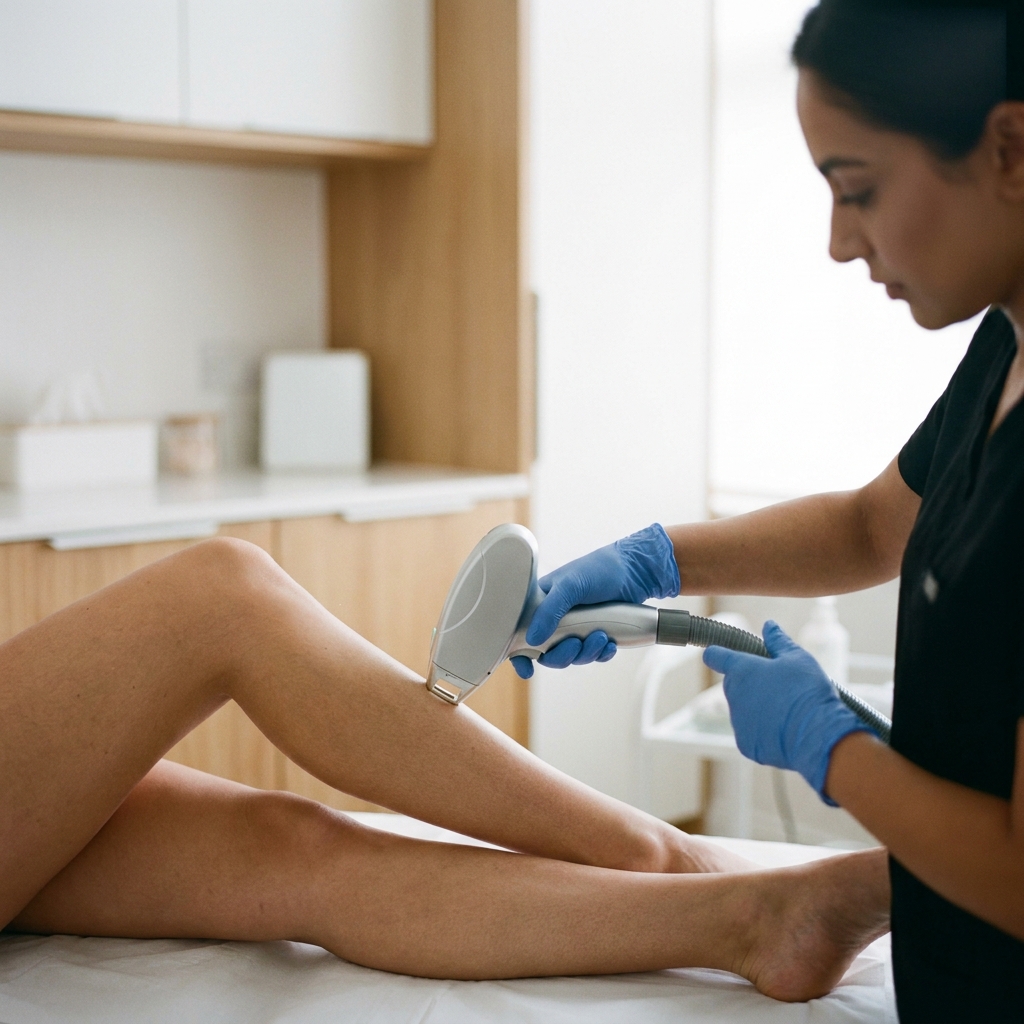
The short answer
Choose a clinic that gives you a proper consultation and patch test, employs a trained operator, uses a laser matched to your skin tone, and can show insurance and — where it applies in your nation — regulator registration. In England look for local-authority special-treatment licensing and ideally a practitioner on the voluntary JCCP register; in Scotland, Wales and Northern Ireland independent clinics are inspected by HIS, HIW and RQIA respectively. Avoid anywhere that skips the patch test or guarantees permanent removal.
A laser is a medical-grade device that heats pigment deep in the skin, so the difference between a careful clinic and a careless one is the difference between a good result and a burn. Regulation of cosmetic laser hair removal varies across the UK, which means the burden of checking falls partly on you. This page sets out exactly what to look for, what good practice looks like, and the warning signs that should send you elsewhere.
Choosing a clinic at a glance
- Consultation Should be offered before you book or pay
- Patch test Essential — usually 24–48 hours before first session
- Operator Trained, with documented laser/IPL training
- Machine Suited to your skin tone — Nd:YAG for darker skin
- Regulation Varies by UK nation — check locally
- Red flag Permanent-removal “guarantees”
Start with credentials, not the price list
The cheapest course is no bargain if the operator is undertrained or the laser is wrong for your skin. Before you compare prices, establish who will actually treat you and what they are qualified to do. A good clinic will tell you the name and training of the operator without being pressed, will explain which laser or IPL system they use, and will be comfortable discussing your skin type on the Fitzpatrick scale. The Joint Council for Cosmetic Practitioners (JCCP) runs a voluntary public register of practitioners who meet agreed standards; a listing there is a useful, though not mandatory, reassurance. The British Medical Laser Association (BMLA) is the professional body in this field and a sign that a clinic engages with proper clinical standards.
Ask how the operator was trained and whether they hold a recognised laser/IPL qualification. Beauty therapy alone is not the same as laser training. The person holding the handpiece should understand skin typing, the risk of burns and pigment changes, eye safety, and what to do if a reaction occurs.
The consultation and patch test are non-negotiable
Any reputable clinic insists on a consultation and a patch test before treating you. The consultation should review your skin tone, hair colour, medical history, medications, sun exposure and realistic expectations. The patch test — a small area treated at the proposed settings, then reviewed 24 to 48 hours later — checks how your skin responds before committing to a full session. A clinic that offers to treat you on the same day with no patch test is cutting a corner that exists precisely to protect you.
- Skin assessment: your Fitzpatrick type guides the laser choice and energy settings.
- Honest expectations: good clinics describe long-term reduction, not permanent removal, and explain that blonde, red, grey and white hair respond poorly.
- Course planning: a typical course is six to eight sessions, four to eight weeks apart, with possible maintenance later.
- Written aftercare: you should leave with clear instructions and a number to call if something goes wrong.
Match the machine to your skin
There is no single best laser; the right one depends on you. Alexandrite and diode lasers suit lighter skin tones well, while the longer-wavelength Nd:YAG is generally safer for darker skin because it targets the follicle while sparing surface pigment. A clinic that owns only one machine and treats every skin tone identically is a concern, particularly if you have a darker skin tone. Ask which device they will use on you and why.
| Check | Good sign | Walk away if… |
|---|---|---|
| Consultation | Offered free, unhurried, reviews medical history | You are booked straight in with no questions |
| Patch test | Done and reviewed before the first full session | Skipped “to save time” |
| Operator | Named, trained, can describe their qualification | Vague about who treats you |
| Claims | Talks about reduction and realistic outcomes | Guarantees 100% permanent removal |
Insurance, hygiene and regulation
Ask whether the clinic carries treatment and public liability insurance, and check the regulatory position for your nation. In England there is no single national regulator for cosmetic laser hair removal, but many local authorities require a “special treatments” licence, so ask whether the premises are licensed locally. In Scotland independent clinics are regulated by Healthcare Improvement Scotland, in Wales by Healthcare Inspectorate Wales, and in Northern Ireland by the RQIA. Where a clinic is doctor-led or the service is medical in nature, the Care Quality Commission may apply in England. Our UK regulation page explains this in detail.
Judge the consultation itself
The quality of the consultation is one of the best predictors of the quality of the clinic. A careful practitioner will take a proper history, examine your skin tone and hair, explain why a particular device suits you, and set honest expectations rather than rushing to close a sale. They should be candid that laser delivers long-term reduction, not guaranteed permanent removal, and that blonde, red, grey or white hair responds poorly. Watch how they handle awkward questions about training, insurance and regulation; an open, unhurried answer is reassuring, while defensiveness or a quick pivot to a discount offer is not. Cleanliness, written records and clear aftercare instructions all reinforce the impression of a clinic that treats safety as routine.
It is also worth understanding how the clinic supports you between and after sessions. Ask what happens if you have a reaction, who you can contact, and how missed or rescheduled appointments are handled — because a course typically runs to six to eight sessions spaced four to eight weeks apart, continuity matters. A clinic that keeps your records and settings so any of its operators could continue your course safely is showing good clinical discipline. Finally, trust the overall feel of the place: a calm environment and an operator happy to answer your questions point to a clinic that takes the responsibility seriously. This is general information, not medical advice; your suitability for treatment must be decided by a qualified practitioner at a consultation and patch test, and results vary from person to person.
Frequently asked questions
Does a clinic have to be registered to do laser hair removal in the UK?
It depends on the nation. In England cosmetic laser hair removal is not nationally registered, though many local authorities require a special-treatments licence; in Scotland, Wales and Northern Ireland independent clinics are regulated by HIS, HIW and RQIA respectively. Always ask the clinic about its local position.
Is a JCCP listing essential?
No — the JCCP register is voluntary, not mandatory. But a practitioner listed on it has met agreed standards, so it is a helpful reassurance alongside training, insurance and a proper consultation.
Should I pay for a whole course up front?
Be cautious. A patch test and at least one session should come first so you know how your skin responds. Avoid clinics that demand large up-front payments before any testing or push time-limited pressure discounts.
How do I know the laser suits my skin tone?
Ask which device they will use and why. Nd:YAG lasers are generally safer for darker skin tones, while alexandrite and diode suit lighter skin. A clinic with only one machine may not be able to treat every skin tone safely.
Sources & further reading
- NHS — Laser hair removal and cosmetic procedures guidance
- JCCP — Joint Council for Cosmetic Practitioners voluntary practitioner register
- BMLA — British Medical Laser Association standards
- CIEH — Chartered Institute of Environmental Health, special-treatment licensing
This guide is general information, not medical advice. A patch test and consultation with a qualified, regulated practitioner are essential before treatment, and results vary by individual. Laser achieves long-term hair reduction, not guaranteed permanent removal of every hair. Discuss any skin or health concerns with the practitioner or your GP.