The short answer
A patch test treats a small area of skin at the settings the clinic plans to use, then reviews it after about 24 to 48 hours to check for adverse reactions before any full session. It helps the practitioner pick safe energy settings for your skin tone and flags problems like burns, blistering or pigment changes early. A clinic that skips the patch test is removing a key safeguard — it should always come before your first full treatment.
The patch test is a small step with a big purpose: it tells the practitioner how your individual skin responds to the laser before they treat a large area. Because reactions can depend on skin tone, recent sun exposure and settings, no consultation can fully predict your response — only a test on your actual skin can. It is one of the clearest signs of a careful clinic.
The patch test at a glance
- What it is A small test area treated at planned settings
- Reviewed after Typically 24–48 hours
- Checks for Burns, blistering, pigment change, excess redness
- Sets Safe energy settings for your skin
- When Before your first full session
- Skipped? A serious red flag — walk away
What a patch test actually involves
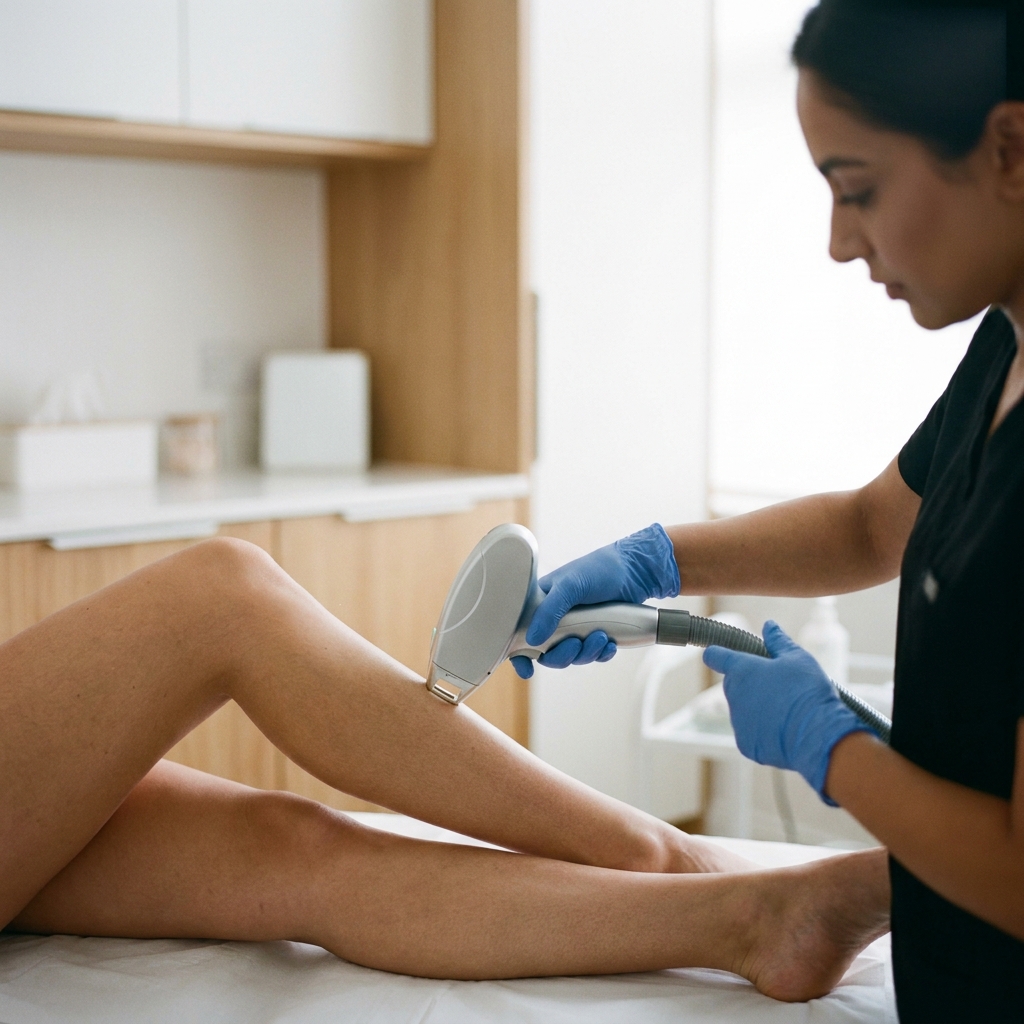
At a patch test, the practitioner applies the laser to a small, discreet area of skin — often near where you plan to be treated — using the energy settings they intend to use for your full session. The point is not to remove hair from that patch but to observe how your skin behaves. You then wait, usually 24 to 48 hours, before the area is reviewed. During that window the practitioner is looking for any reaction that would make full treatment unsafe at those settings. It is quick and low-risk, and it is precisely because it is small that it is safe to do first.
Why it is essential, not optional
Laser hair removal works by heating the pigment in the hair follicle, and how your skin handles that energy depends on factors a consultation alone cannot fully measure — particularly your skin tone and any recent sun exposure. A patch test reveals problems before they affect a large area:
- Burns and blistering: if settings are too high for your skin, a small test area shows it before your whole leg or face is affected.
- Pigment changes: darker skin tones carry a higher risk of hyperpigmentation or hypopigmentation; the test helps the practitioner choose safe settings.
- Excessive redness or swelling: some skin reacts strongly, and the test gauges this.
- Settings calibration: the practitioner uses the result to fine-tune energy for your first full session.
For more on what can go wrong and how to manage it, see side effects and burns.
What the result tells the clinic
A good response means little to no adverse reaction, which lets the practitioner proceed with confidence at the tested settings. A poor response — significant blistering, marked pigment change or prolonged redness — means the settings should be lowered, the device choice reconsidered, or, occasionally, that treatment is not advisable. This is especially important for darker skin tones, where an Nd:YAG laser is generally safer; read more on treatment across skin tones.
| Patch test result | What it means | Likely next step |
|---|---|---|
| Minimal reaction | Settings appear safe for your skin | Proceed to first full session |
| Strong redness/swelling | Skin sensitive at these settings | Lower energy or reassess |
| Blistering or burn | Settings too high or skin unsuitable | Adjust device/settings or defer |
| Pigment change | Risk of marks — common concern in darker skin | Reconsider device and settings |
How the patch test fits the wider process
The patch test normally follows your consultation and precedes your first full session. Together they form the safety backbone of treatment. When you are choosing a clinic, treat an insistence on patch testing as a positive sign and its absence as a reason to look elsewhere.
When you may need a repeat test
A patch test is not always a one-off. Several changes can alter how your skin responds, and a careful clinic will repeat the test when they apply:
- A new clinic or device: different machines and settings can produce different reactions, so a fresh test is sensible if you switch.
- Significant sun exposure or tanning: recent sun, sunbeds or fake tan change the pigment in your skin and its response to the laser.
- A change in medication: some drugs increase light sensitivity, so a new prescription may warrant another test.
- A long gap in treatment: if your skin or circumstances have changed since the last session, re-testing adds a margin of safety.
None of this should feel like an inconvenience. The few minutes a patch test takes are a small price for confidence that a full session at the chosen settings will be safe for your skin. If you ever feel a clinic is treating the patch test as an optional formality rather than a genuine safety step, that tells you something about how it weighs your safety against its schedule. This page is general information, not medical advice; the meaning of your own patch test must be judged by a qualified practitioner, and individual responses vary.
Frequently asked questions
How long before treatment is a patch test done?
Typically the test is carried out and then reviewed after about 24 to 48 hours, before your first full session. This window lets any delayed reaction show before a large area is treated.
Does a patch test hurt?
Because only a small area is treated, any sensation is brief and limited. Most people describe a quick warm snap rather than pain; numbing is rarely needed for a test.
Do I need a new patch test if I change clinics or settings?
Often yes. A different clinic, device or significantly different settings can change how your skin responds, so a fresh patch test is sensible. Recent sun exposure or tanning may also require a repeat.
What if my patch test reacts badly?
The practitioner should lower the energy, reconsider the device, or in some cases advise against treatment. A bad reaction is exactly what the test is designed to catch before a full session.
Sources & further reading
- NHS — Laser hair removal: patch testing and skin reactions
- JCCP — good practice on patch testing and consent
- BMLA — clinical guidance on laser safety
- MHRA — safe use of lasers and IPL
This guide is general information, not medical advice. A patch test and consultation with a qualified, regulated practitioner are essential before treatment, and results vary by individual. Laser achieves long-term hair reduction, not guaranteed permanent removal of every hair. Discuss any skin or health concerns with the practitioner or your GP.