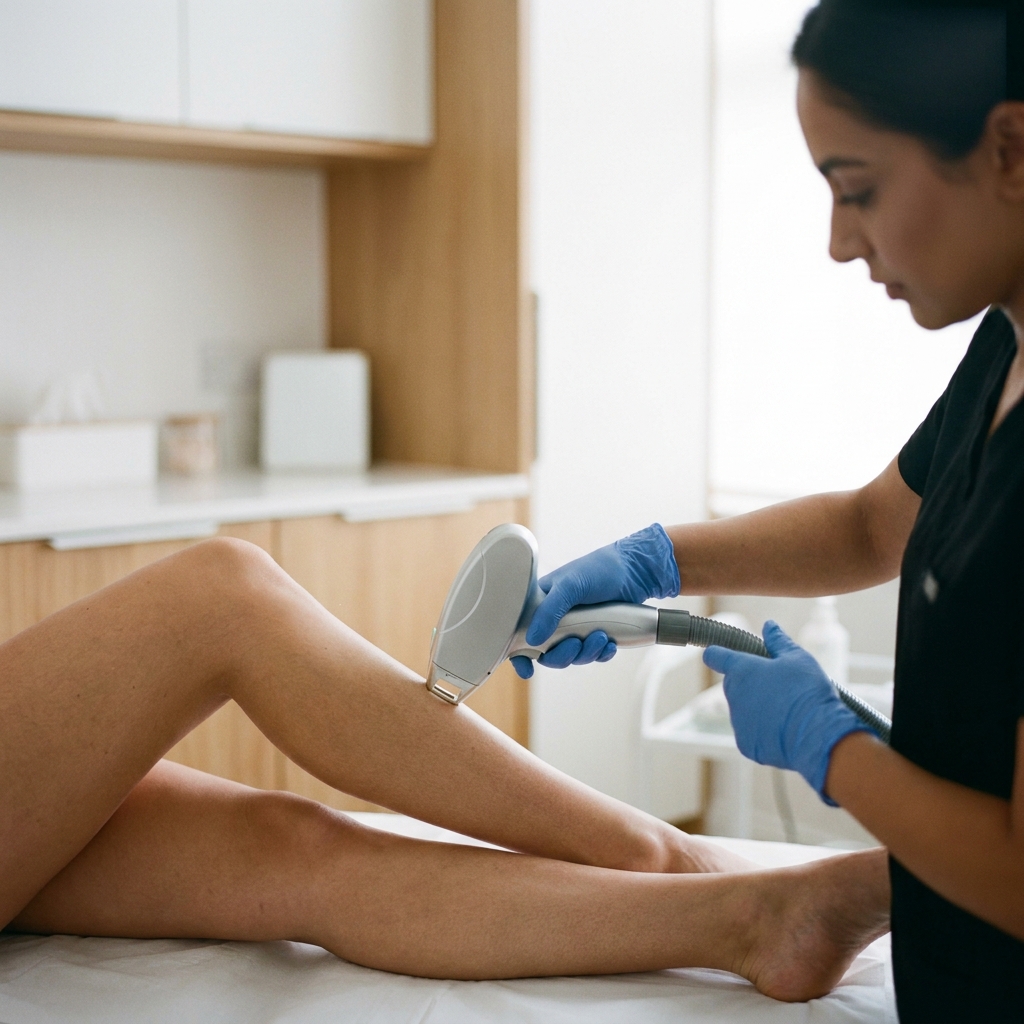
The short answer
All skin tones can have laser hair removal, but the device must be matched to the skin to keep it safe and effective. Because the laser targets pigment, darker skin historically carried a higher risk of burns or pigment changes with older lasers. Modern Nd:YAG lasers use a longer wavelength that passes the skin’s surface pigment more safely, making darker skin treatable by an experienced practitioner. A consultation, the right device and a patch test are essential, and results still depend on hair colour.
Skin tone is one of the most important factors in laser hair removal, because the same pigment the laser uses to target hair is also present in the skin. For decades this meant darker skin was considered difficult or risky to treat. Technology has moved on, and with the right laser and a skilled practitioner, a much wider range of skin tones can be treated safely. This page explains how, why device choice is critical, and what to ask before you start.
Skin tone and laser at a glance
- All tones Treatable with the right device
- The risk Skin pigment can absorb the light
- Safer for dark skin Nd:YAG (longer wavelength)
- Assessment tool Fitzpatrick skin-type scale
- Still required Dark hair for the laser to target
- Essential Patch test & experienced practitioner
Why skin tone matters so much
As our page on how lasers target hair explains, the laser works by heating melanin — the pigment in the hair. The complication is that melanin is also in the skin, and more so in darker skin. If the laser’s light is absorbed too much by the skin’s surface pigment rather than the hair, the result can be heating of the skin itself, raising the risk of burns or changes in pigmentation. This is the central challenge of treating darker skin tones, and it is why device choice is not a detail but the whole point.
Practitioners often classify skin using the Fitzpatrick scale, a six-point system from very fair skin that always burns (Type I) to deeply pigmented skin that rarely burns (Type VI). The scale helps match the right laser and settings to each person.
How modern lasers treat darker skin
The breakthrough for darker skin is wavelength. Longer wavelengths penetrate deeper and are absorbed less by the melanin sitting in the upper layers of the skin, so more of the energy reaches the follicle and less is wasted heating the surface. The Nd:YAG laser, at around 1064 nm, has the longest wavelength of the common devices and is therefore generally the safest choice for darker skin tones.
| Laser | Wavelength | Suitability by skin tone |
|---|---|---|
| Alexandrite | ~755 nm | Best for fair skin; higher caution on darker skin |
| Diode | ~800–810 nm | Versatile across a range of tones |
| Nd:YAG | ~1064 nm | Safest option for darker skin |
For the full comparison, see diode vs alexandrite vs Nd:YAG and our overview of the types of laser.
What still has to be true
- The hair must be dark enough — the laser still relies on pigment in the hair, so blonde, red, grey or white hair responds poorly regardless of skin tone.
- The device must match the skin — using a short-wavelength laser on darker skin raises the risk of burns and pigment changes.
- The practitioner must be experienced — safe treatment of darker skin depends on skill and the correct settings, not just the right machine.
- A patch test is non-negotiable — it checks how your skin reacts before a full course.
The role of tanning and sun exposure
One factor that affects every skin tone is a tan. A recent tan, whether from the sun or a sunbed, temporarily raises the amount of melanin in the skin’s surface, which effectively makes the skin behave like a darker tone for the purposes of laser treatment. That increases how much of the laser’s light the skin absorbs, raising the risk of burns or pigment changes. For this reason practitioners generally advise avoiding sun exposure and fake tan for a period before and after each session, and treating during seasons or with precautions that keep the skin at its natural baseline. This applies regardless of your underlying skin tone, but it matters most where the margin for safe treatment is already narrower.
- Before treatment — avoid sun, sunbeds and fake tan so the skin is at its true colour.
- After treatment — protect the area from the sun while it settles, and use sunscreen.
- Honesty helps — tell your practitioner about any recent sun exposure so they can adjust or postpone.
What to ask before you book
If you have a darker skin tone, ask which laser the clinic uses, whether the practitioner has experience treating skin like yours, and what the patch test involves. A reputable clinic will welcome these questions — our guide on questions to ask has a full list. The combination of the right device, an experienced practitioner, sensible sun precautions and a patch test is what makes treatment across skin tones both safe and effective.
Frequently asked questions
Can darker skin have laser hair removal?
Yes, with the right device. Modern Nd:YAG lasers use a longer wavelength that passes the skin’s surface pigment more safely, so darker skin can be treated by an experienced practitioner after a patch test.
Which laser is best for dark skin?
The Nd:YAG laser is generally considered the safest for darker skin because its long 1064 nm wavelength is absorbed less by surface pigment. An experienced practitioner and a patch test remain essential.
Is laser hair removal riskier on darker skin?
It can be if the wrong device or settings are used, because skin pigment may absorb the light and cause burns or pigment changes. Using a suitable laser and an experienced practitioner greatly reduces this risk.
Does skin tone affect how well it works?
Indirectly — the device must suit your skin, but results still depend most on hair colour. Dark hair responds best on any treatable skin tone, while light hair responds poorly regardless of skin.
Sources & further reading
- NHS — Cosmetic procedures: laser hair removal and IPL
- NHS — Skin types and sun safety guidance
- MHRA — Lasers, intense light sources (IPL) and LEDs: guidance
- British Medical Laser Association (BMLA) — Guidance on treating different skin types
This guide is general information, not medical advice. A patch test and consultation with a qualified, regulated practitioner are essential before treatment, and results vary by individual. Laser achieves long-term hair reduction, not guaranteed permanent removal of every hair. Discuss any skin or health concerns with the practitioner or your GP.