The short answer
Ask who will treat you and how they were trained, which laser they use and why it suits your skin tone, whether you will get a consultation and patch test, what the realistic results and number of sessions are, and what insurance and regulation apply. Good answers are specific and unhurried. Vague replies, refusal to discuss training, or guarantees of permanent removal are warning signs that should make you reconsider before booking.
The right questions do two jobs at once: they get you the practical information you need, and they reveal how a clinic responds to scrutiny. A confident, well-run clinic answers plainly and without defensiveness. This page gives you the questions worth asking and explains what a good answer sounds like, so you can tell a careful clinic from a careless one.
Questions at a glance
- Who treats me? Named, trained operator — not “a therapist”
- Which laser? A device suited to your skin tone
- Patch test? Always yes, before the first session
- Results? Reduction, not guaranteed permanent removal
- Insurance? Treatment and public liability cover
- Regulation? Local licensing or HIS/HIW/RQIA where it applies
Questions about who treats you
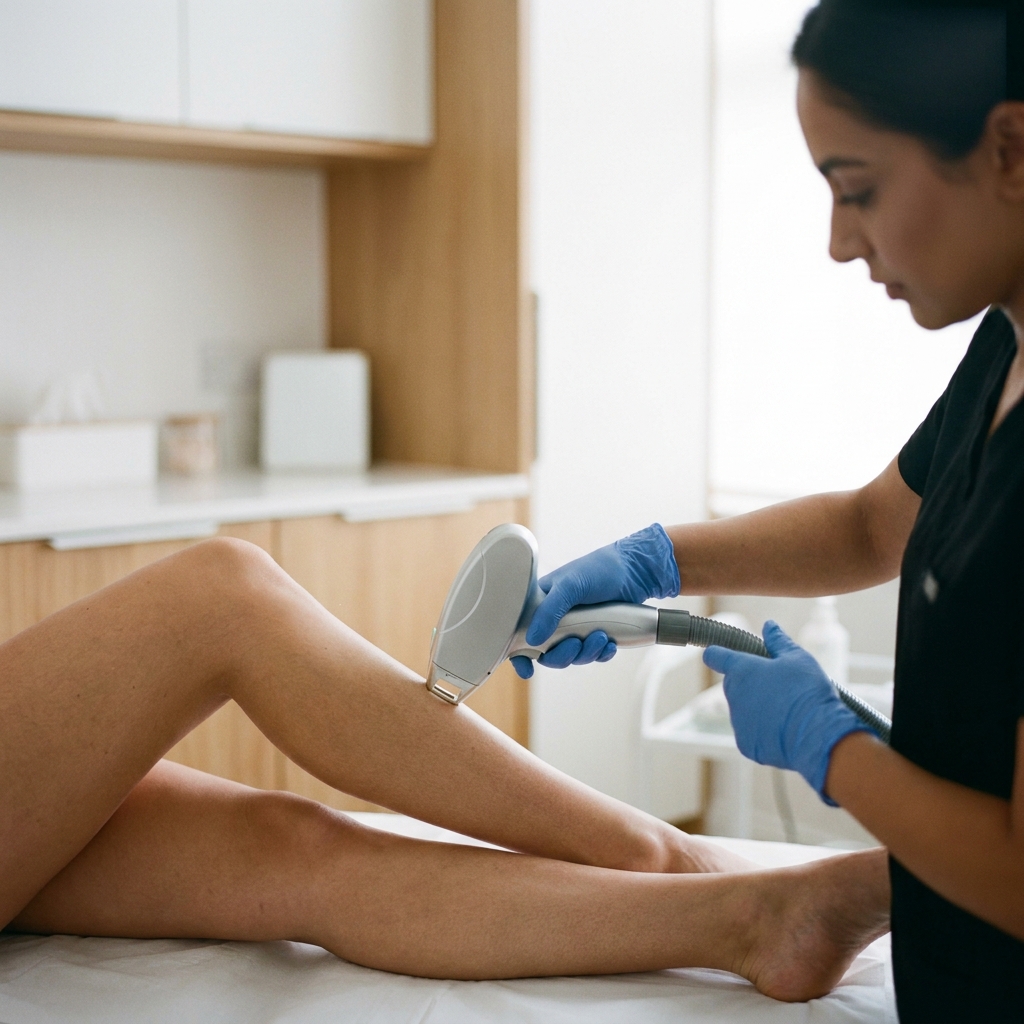
Start with the person holding the handpiece, because their training matters more than the brochure. Ask directly: who will carry out my treatment, and how were they trained? A good answer names a qualified operator with a recognised laser/IPL qualification and is comfortable describing that training. A vague answer — “one of our therapists” — with no detail about laser-specific training is a warning sign. You can read more in is my technician qualified?
- Who specifically will treat me, and what is their laser/IPL training?
- How many treatments like mine have they carried out?
- What happens, and who do I contact, if I have a reaction afterwards?
Questions about the machine and your skin
The right device depends on your skin tone, so the machine question is really a safety question. Ask which laser they will use and why it suits you. A careful clinic will reference your Fitzpatrick skin type and explain its choice — for example, an Nd:YAG laser for darker skin tones, or alexandrite or diode for lighter skin. A clinic that uses one machine on everyone, or cannot explain its choice, may not be able to treat your skin safely. See machine types and skin tones for the background.
Questions about safety and process
These questions confirm the safeguards are in place before treatment:
- Consultation and patch test: will I get a consultation and a patch test before my first full session? The answer should always be yes.
- Eye protection: what eye protection do you provide during treatment?
- Aftercare: what aftercare advice and support do you give, and is it written down?
- Medical screening: how do you account for my medications, skin conditions and recent sun exposure?
| Question | Reassuring answer | Warning answer |
|---|---|---|
| Who treats me? | A named, laser-trained operator | “One of the team” with no detail |
| Which laser and why? | Explains the device for your skin tone | One machine for everyone |
| Patch test? | Yes, before the first session | “Not necessary” |
| What results? | Long-term reduction, realistic numbers | “Permanent, guaranteed” |
Questions about results, cost and regulation
Finally, pin down expectations and the business basics. Ask what results you can realistically expect, how many sessions you are likely to need, and how they are spaced. A good clinic will describe long-term reduction rather than guaranteed permanent removal, and a course of roughly six to eight sessions four to eight weeks apart, with possible maintenance. Ask about total cost, whether the package is refundable if you stop, and whether the clinic holds treatment and public liability insurance. Ask too about regulation — local-authority licensing in England, or registration with HIS, HIW or RQIA in Scotland, Wales and Northern Ireland. See UK regulation for the detail.
Questions to ask yourself, too
Not every useful question is for the clinic. Before you commit, it helps to be honest with yourself about your own expectations and circumstances, because that shapes whether laser is the right choice and which clinic suits you.
- Are my expectations realistic? Laser delivers long-term reduction, not guaranteed permanent removal of every hair; if you expect total, permanent clearance, you may be disappointed.
- Can I commit to the full course? Results depend on completing roughly six to eight sessions, four to eight weeks apart, so consider whether the schedule and travel are manageable.
- Is my skin or hair suited to it? Blonde, red, grey and white hair respond poorly; a consultation will confirm, but it is worth knowing before you book.
- Have I disclosed everything? Medications, skin conditions and recent sun exposure all affect safety, and withholding them undermines the screening that protects you.
Answering these honestly means you arrive at the consultation ready to have a productive conversation rather than a sales pitch. A clinic that engages thoughtfully with your self-assessment — rather than brushing concerns aside — is one worth trusting.
Asking these questions costs nothing and tells you a great deal. Bring them to your consultation and judge the clinic by the clarity and honesty of its answers. This page is general information, not medical advice; a qualified practitioner must decide your suitability at a consultation and patch test, and results vary.
Frequently asked questions
What is the most important question to ask?
Whether you will get a consultation and patch test before any full treatment, and who — specifically — will treat you and how they were trained. These reveal both the clinic’s safety practices and the operator’s competence.
Should I ask about the specific laser machine?
Yes. Ask which device they will use and why it suits your skin tone. The right laser depends on your skin, and a clinic that can explain its choice is safer than one using a single machine on everyone.
Is it rude to ask about training and insurance?
Not at all — it is sensible, and a good clinic expects it. Reluctance to answer questions about training, insurance or regulation is itself a useful warning sign.
What answer should make me walk away?
A guarantee of permanent removal, a refusal to provide a patch test, vagueness about who treats you and their training, or heavy pressure to pay for a long course before any testing.
Sources & further reading
- NHS — Laser hair removal: questions to ask a practitioner
- JCCP — consumer guidance and practitioner standards
- BMLA — clinical good-practice guidance
- MHRA — safe use of lasers and IPL devices
This guide is general information, not medical advice. A patch test and consultation with a qualified, regulated practitioner are essential before treatment, and results vary by individual. Laser achieves long-term hair reduction, not guaranteed permanent removal of every hair. Discuss any skin or health concerns with the practitioner or your GP.