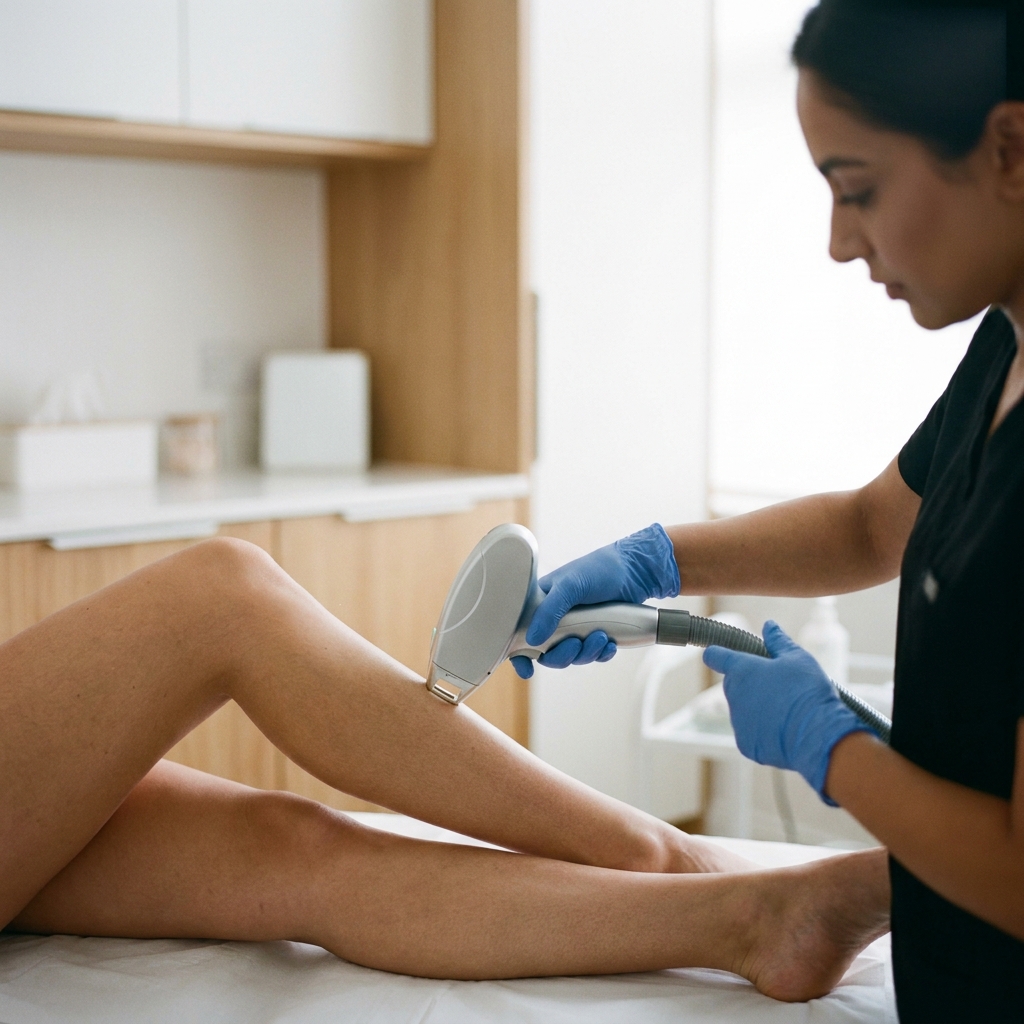
The short answer
The main professional systems are the alexandrite and diode lasers, best suited to lighter skin tones, and the longer-wavelength Nd:YAG, which is generally safer for darker skin. IPL is a broad-spectrum light, not a true laser, and is more common in home and budget devices. Each targets pigment in the hair, so all work best on dark hair and poorly on blonde, red, grey or white hair. The right machine depends on your skin tone and hair, which a consultation and patch test confirm.
“Laser hair removal” covers several different technologies, and the differences are not marketing detail — they determine how safely and effectively a machine can treat your particular skin and hair. Knowing the main types lets you ask a clinic a sharper question: not just “do you do laser?” but “which machine, and why is it right for me?” This page explains the options without recommending any single one, because the best machine is the one that fits you.
Machine types at a glance
- Alexandrite Shorter wavelength; lighter skin tones
- Diode Versatile; commonly used; lighter-to-medium skin
- Nd:YAG Longer wavelength; safer for darker skin
- IPL Broad-spectrum light, not a true laser
- All types Work best on dark hair, poorly on light hair
- Best machine The one matched to your skin and hair
How the machines differ
All laser hair-removal systems work on the same principle — selectively heating the melanin (pigment) in the hair follicle — but they use different wavelengths of light, and wavelength is what determines how deep the energy goes and how it interacts with the pigment in your skin. Shorter wavelengths are strongly absorbed by pigment, which is efficient on light skin but risky on dark skin; longer wavelengths penetrate deeper and interact less with surface pigment, making them safer for darker skin tones. That single fact explains most of the differences between the machine types below. For the underlying science, see how lasers target hair and diode vs alexandrite vs Nd:YAG.
The three main laser types
- Alexandrite: a shorter-wavelength laser that is well absorbed by pigment, making it fast and effective on lighter skin tones with dark hair. Its strong absorption by surface pigment is why it is generally not the first choice for darker skin.
- Diode: a versatile, widely used wavelength that works well across lighter to medium skin tones and is a common workhorse in UK clinics. Many modern diode systems include cooling to improve comfort.
- Nd:YAG: the longest of the common wavelengths, which penetrates deeper and interacts less with skin surface pigment. This makes it generally the safest option for darker skin tones, though it can be less efficient on fine hair.
IPL is not a laser
Intense pulsed light (IPL) is often grouped with laser hair removal, but it is technically different. Instead of a single, focused wavelength, IPL emits a broad spectrum of light. This makes it more affordable and common in home and budget devices, but generally less precise and less effective than a true laser, and the skin-tone limitations can be more pronounced. If you are weighing a salon IPL package against a clinic laser, the distinction matters — see laser vs IPL and clinic vs home.
| Type | Wavelength | Best suited to | Note |
|---|---|---|---|
| Alexandrite | Shorter | Lighter skin tones, dark hair | Fast; not ideal for dark skin |
| Diode | Medium | Light to medium skin tones | Versatile, widely used |
| Nd:YAG | Longer | Darker skin tones | Safer for dark skin; less efficient on fine hair |
| IPL | Broad spectrum | Lighter skin, dark hair | Not a true laser; common in home devices |
Why the machine must match you
None of these systems works well on blonde, red, grey or white hair, because there is too little pigment to target — that limitation applies across all of them. Within the range they can treat, the right choice depends on your skin tone: an alexandrite or diode laser for lighter skin, an Nd:YAG for darker skin. This is why a clinic with only one machine may not be able to treat every patient safely, and why you should ask which device will be used on you and why. The decision should be made by a trained operator at your consultation and confirmed by a patch test.
You do not need to become a laser engineer — you need enough understanding to ask the right question and judge the answer. A clinic that can explain, in plain terms, which machine it will use on you and why is demonstrating exactly the competence you want. This page is general information, not medical advice; your suitability and the correct device must be decided by a qualified practitioner, and results vary by individual.
Frequently asked questions
Which laser machine is best?
There is no single best machine — the right one depends on your skin tone and hair. Alexandrite and diode suit lighter skin, while Nd:YAG is generally safer for darker skin. A clinic should choose based on your skin type at a consultation.
What is the difference between laser and IPL machines?
A laser emits a single focused wavelength, while IPL emits a broad spectrum of light. Lasers are generally more precise and effective; IPL is more common in home and budget devices and can have more pronounced skin-tone limits.
Which machine is safest for dark skin?
The Nd:YAG laser, with its longer wavelength, is generally the safest option for darker skin tones because it interacts less with surface pigment. Ask specifically whether a clinic offers it before booking.
Does the machine matter if my hair is blonde or grey?
Unfortunately the limitation applies to all machines: none works well on blonde, red, grey or white hair because there is too little pigment to target. A consultation can confirm whether laser is worth trying for you.
Sources & further reading
- NHS — Laser hair removal: how it works and device types
- MHRA — regulation of lasers and IPL devices
- BMLA — clinical guidance on laser systems
- JCCP — practitioner standards and device suitability
This guide is general information, not medical advice. A patch test and consultation with a qualified, regulated practitioner are essential before treatment, and results vary by individual. Laser achieves long-term hair reduction, not guaranteed permanent removal of every hair. Discuss any skin or health concerns with the practitioner or your GP.