The short answer
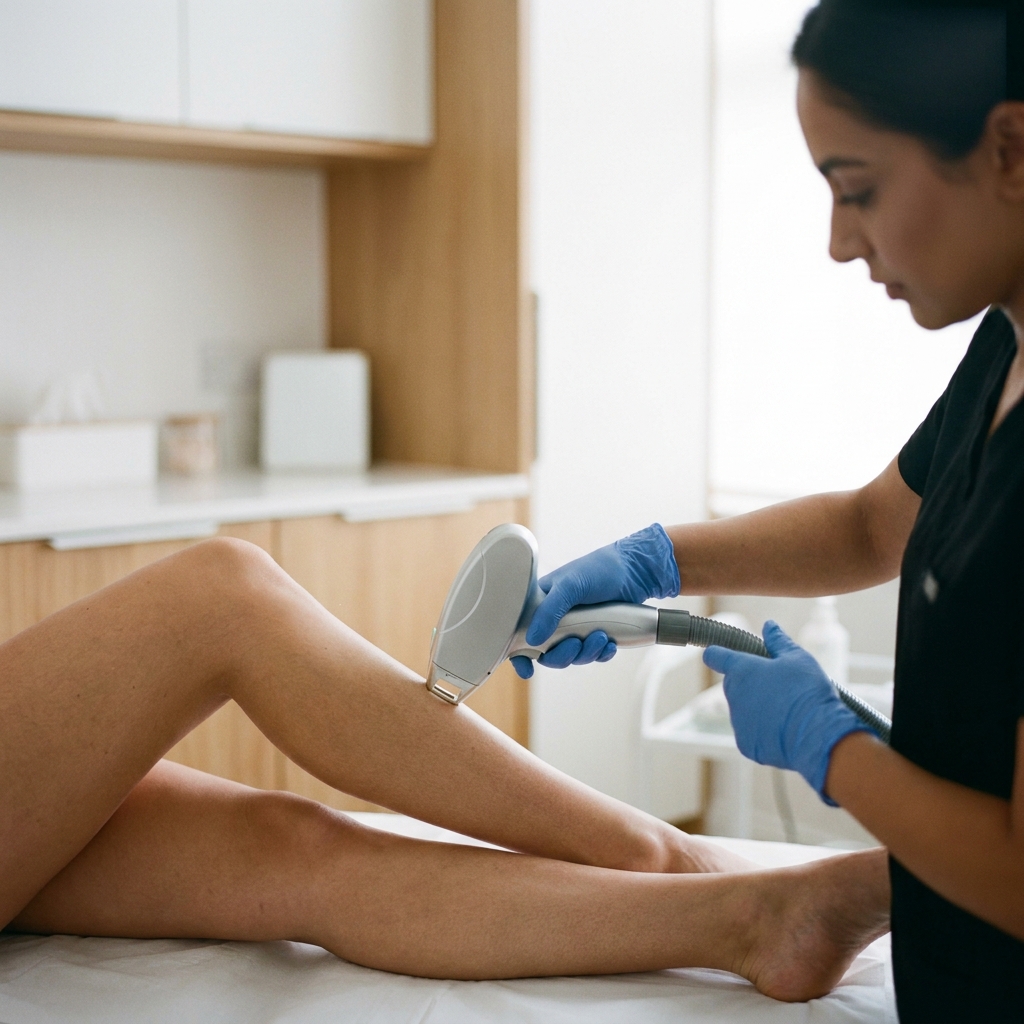
Clinic lasers are medical-grade, more powerful and operated by a trained practitioner who can match the device to your skin tone, so they tend to work faster and on a wider range of cases. Home IPL and laser devices are lower-powered, convenient and cheaper over time, but slower, generally unsuitable for dark skin tones or light hair, and they put eye safety and technique in your hands. Both have a place; the right choice depends on your skin, hair and priorities.
At-home hair-removal devices have made the technology accessible at home, but they are not simply weaker versions of clinic machines — they involve different trade-offs in power, safety and supervision. This page compares the two honestly, without favouring either, so you can decide based on your skin tone, hair colour, budget and how much you value professional oversight.
Clinic vs home at a glance
- Power Clinic medical-grade; home lower-powered
- Operator Clinic: trained practitioner; home: you
- Skin tones Clinic: wider range; home: limited
- Speed Clinic generally faster results
- Cost Home cheaper long-term; clinic higher per course
- Safety Clinic supervised; home self-managed
The core difference: power and supervision
The biggest distinction is energy and who controls it. Clinic lasers are medical-grade devices that deliver more energy and can be precisely matched to your skin tone and hair by a trained operator. That power, combined with professional judgement, is why clinic courses tend to produce results more quickly and can treat a wider range of cases. Home devices — most of which use intense pulsed light (IPL) rather than a true laser, though some home lasers exist — are deliberately lower-powered for safety in untrained hands. They can reduce hair over time, but more slowly, and you are responsible for technique, consistency and eye safety. For the broader laser-versus-IPL distinction, see laser vs IPL.
Skin tone and hair colour matter more at home
Both clinic and home treatments rely on targeting pigment in the hair, so both work best on dark hair and poorly on blonde, red, grey or white hair. But the skin-tone limitation is sharper for home devices. Many home IPL devices include skin-tone sensors and are explicitly not recommended for darker skin tones, because the light can target pigment in the skin as well as the hair, raising the risk of burns or pigment changes. A clinic can choose a longer-wavelength Nd:YAG laser that treats darker skin more safely — an option a home device generally cannot match.
- Dark skin tones: clinic Nd:YAG is generally the safer route; many home devices are unsuitable.
- Light hair: neither works well on blonde, red, grey or white hair.
- Sensitive areas: a practitioner can adapt settings and technique; at home you must follow the device limits carefully.
| Factor | Clinic laser | Home IPL / laser device |
|---|---|---|
| Power | Medical-grade, higher | Lower, capped for home safety |
| Operator | Trained practitioner | You |
| Skin tones | Wider range (incl. Nd:YAG for dark skin) | Often limited to lighter skin |
| Speed of results | Generally faster | Slower, needs sustained use |
| Cost | Higher per course | Lower over time after device purchase |
| Safety oversight | Professional, patch-tested | Self-managed |
Cost, convenience and consistency
Home devices win on convenience and long-run cost: after the up-front purchase you treat yourself at home on your own schedule, with no per-session fee. A clinic course — typically six to eight sessions, four to eight weeks apart, often £50–£150 per session for a small area and more for larger areas — costs more but includes professional assessment, the right machine and supervision. The catch with home devices is consistency: results depend on you using the device correctly and regularly over months, and many people drift off the routine. See cost for clinic figures.
So which is right for you?
If you have a darker skin tone, want faster results, or value professional assessment and the ability to treat tricky cases, a clinic is generally the stronger choice. If you have suitable skin and hair, a modest budget, and the discipline to keep a routine, a home device can deliver gradual reduction at lower long-term cost. Many people start with a clinic and use a home device for maintenance. Whichever you pick, a patch test — or following the device’s skin-test step — matters. This is general information, not medical advice; suitability for either route should be confirmed by a qualified practitioner, and results vary by individual.
Frequently asked questions
Are home laser hair removal devices as effective as clinics?
Generally no. Home IPL and laser devices are lower-powered for safety, so results come more slowly and over a narrower range of skin and hair types. Clinic lasers are more powerful and professionally matched to your skin, which usually means faster, broader results.
Can I use a home device on dark skin?
Often not. Many home IPL devices are explicitly not recommended for darker skin tones because of the risk of burns or pigment changes. A clinic can use a longer-wavelength Nd:YAG laser that is generally safer for darker skin — check the device guidance and consider a consultation.
Is a home device cheaper overall?
Usually over the long run, yes, because after the up-front purchase there is no per-session fee. But results depend on consistent, correct use over months, and a clinic includes professional assessment and the right machine for your skin.
Can I combine clinic treatment with a home device?
Many people do — a clinic course first, then a home device for occasional maintenance. Follow the home device’s instructions and seek advice if you have a reaction that does not settle.
Sources & further reading
- NHS — Laser hair removal and at-home IPL devices guidance
- MHRA — regulation and safe use of lasers and IPL products
- BMLA — professional laser standards
- JCCP — practitioner standards and consumer guidance
This guide is general information, not medical advice. A patch test and consultation with a qualified, regulated practitioner are essential before treatment, and results vary by individual. Laser achieves long-term hair reduction, not guaranteed permanent removal of every hair. Discuss any skin or health concerns with the practitioner or your GP.