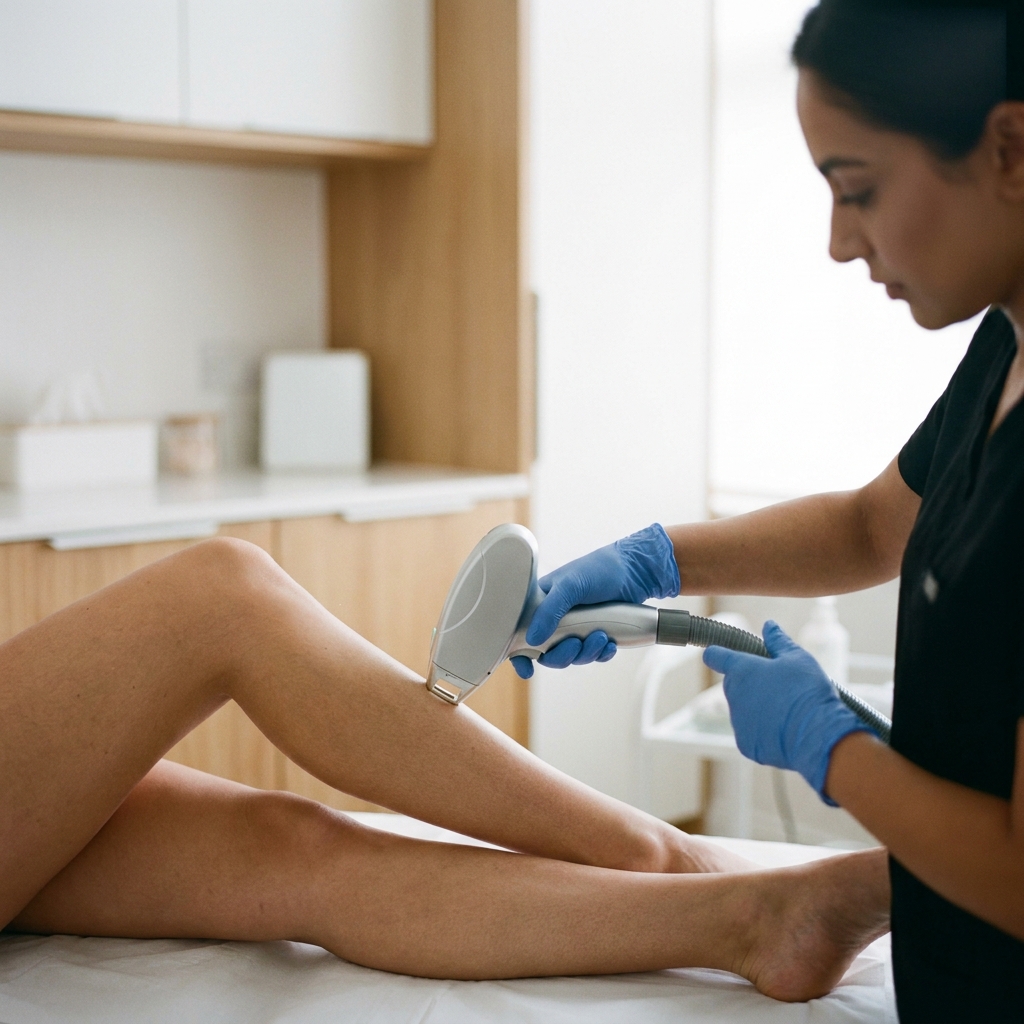
The short answer
A consultation is where a qualified practitioner assesses your skin tone and hair colour, reviews your medical history and medications, explains realistic outcomes, and plans your course — usually before arranging a patch test. Expect questions about sun exposure, skin conditions and any drugs that affect light sensitivity. It is also your chance to ask questions. A consultation that genuinely screens you, rather than simply selling a package, is a sign of a careful clinic.
The consultation is the most important appointment in the whole process, because it decides whether laser hair removal is suitable for you at all and, if so, how it should be done. A good practitioner uses it to gather the information that keeps you safe and sets honest expectations. Treat it as a two-way assessment: they screen you, and you assess them.
The consultation at a glance
- Purpose Assess suitability and plan treatment
- Covers Skin tone, hair colour, medical history, medications
- Often free Many UK clinics offer it at no charge
- Leads to A patch test before the first full session
- Your role Ask questions and be honest about your history
- Outcome A realistic plan — or advice that laser isn’t for you
What the practitioner assesses
The core of the consultation is a structured assessment of whether you are a good candidate. The practitioner will look at your skin tone — usually using the Fitzpatrick scale — and your hair colour, because laser targets the melanin (pigment) in the follicle. This means dark hair responds best, while blonde, red, grey and white hair contain little pigment and respond poorly; an honest practitioner will tell you this rather than take your money for a treatment unlikely to work. They will also consider your skin tone when choosing the laser, since darker skin is generally treated more safely with an Nd:YAG device. For more on the underlying science, see how laser hair removal works.
Medical history and medications
You will be asked about your medical history because several factors affect safety and suitability. Be honest and thorough — this is screening that protects you.
- Photosensitising medication: some drugs make skin more sensitive to light; the practitioner needs to know what you take.
- Skin conditions: active eczema, psoriasis, infections or recent cosmetic procedures in the area may delay or rule out treatment.
- Sun exposure and tanning: recent sun, sunbeds or fake tan increase the risk of burns and pigment changes, so treatment is often deferred.
- Hormonal factors: conditions such as PCOS can drive hair growth and influence expectations — see laser and PCOS.
- Pregnancy: clinics usually defer treatment during pregnancy as a precaution — see laser while pregnant.
Setting realistic expectations
A responsible consultation sets honest expectations. The practitioner should explain that laser achieves long-term hair reduction, not guaranteed permanent removal of every hair, and that a typical course runs to six to eight sessions spaced four to eight weeks apart, with occasional maintenance afterwards. The spacing exists because the laser only affects hair in its active growth phase, so repeat sessions are needed to catch more follicles over time. If a clinic promises 100% permanent results, that is a reason to be sceptical.
| Topic | What a good consultation does |
|---|---|
| Skin and hair | Assesses Fitzpatrick type and hair colour, sets honest expectations |
| Medical screening | Reviews medications, skin conditions, sun exposure, pregnancy |
| Plan | Estimates sessions and spacing, explains reduction not removal |
| Next step | Arranges a patch test before the first full session |
Questions, cost and next steps
Many UK clinics offer the consultation free of charge, and it is your opportunity to ask the right questions about training, machines and aftercare. Use it. The consultation normally leads to a patch test, carried out and reviewed before your first full session, so the clinic can see how your skin responds at the proposed settings.
How to prepare and what to bring
You can make the consultation more useful by preparing a little. Bring a list of any medications and supplements you take, details of any skin conditions, and a note of recent sun exposure, sunbed use or fake tan in the area to be treated, since all of these affect safety and timing. Avoid waxing, plucking or epilating the area for several weeks beforehand, because laser targets the hair in the follicle and these methods remove the root the laser needs; shaving is usually fine and often preferred. Come with your own questions too — about the operator’s training, the device, eye protection and aftercare — and do not be shy about asking them.
- A written list of medications, supplements and relevant medical history.
- Notes on recent sun exposure, sunbeds or fake tan.
- Your questions about training, machines, safety and cost.
- Realistic goals, so the practitioner can tell you what is achievable.
During the appointment, expect a discussion of cost and the likely number of sessions for your area, so you leave with a clear sense of the commitment. A good consultation ends with you understanding the plan, the risks and the realistic outcome — not feeling pressured to pay for a long course on the spot.
If the consultation concludes that laser is not suitable for you — because of your hair colour, a medical factor, or timing — a good practitioner will say so plainly. That honesty is a feature, not a failure. This page is general information, not medical advice; your suitability must be decided by a qualified practitioner, and individual results vary.
Frequently asked questions
Is the consultation free?
Many UK clinics offer the consultation free of charge, though some charge a small fee that may be redeemable against treatment. Confirm when you book.
What should I bring or prepare?
A list of any medications you take, details of skin conditions and recent sun exposure or tanning, and your own questions. Avoid sunbeds, fake tan and heavy sun exposure beforehand.
Can I have treatment on the same day as the consultation?
Usually not. A reputable clinic arranges a patch test first and reviews it after 24 to 48 hours before your first full session, so same-day treatment is a corner you should not want cut.
What if the consultation says laser isn’t suitable for me?
A good practitioner will tell you honestly — for example if your hair is too light to respond well or a medical factor makes treatment risky. That is responsible practice, and you may be offered alternatives to consider.
Sources & further reading
- NHS — Laser hair removal: consultation and suitability
- JCCP — standards for consultation and consent
- BMLA — clinical good-practice guidance
- MHRA — safe use of lasers and IPL devices
This guide is general information, not medical advice. A patch test and consultation with a qualified, regulated practitioner are essential before treatment, and results vary by individual. Laser achieves long-term hair reduction, not guaranteed permanent removal of every hair. Discuss any skin or health concerns with the practitioner or your GP.