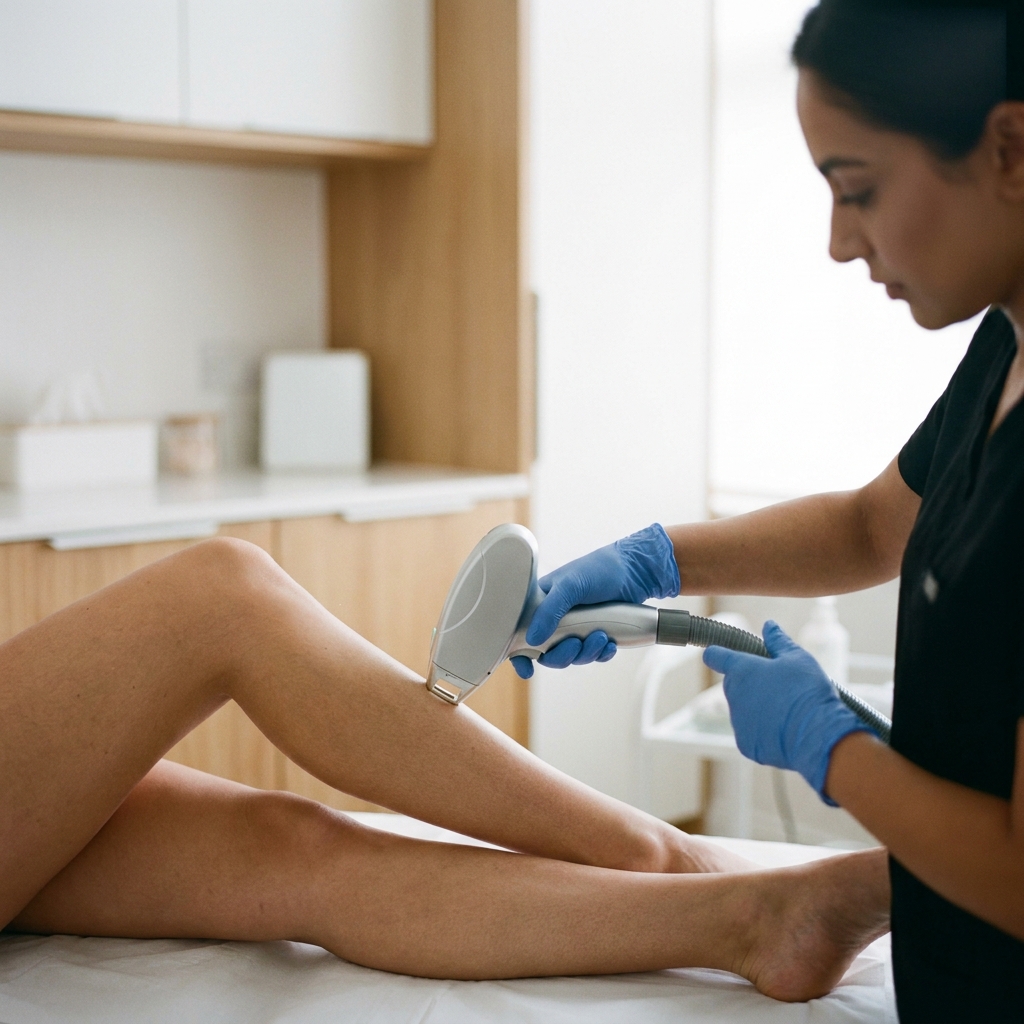
The short answer
Laser can help reduce PCOS-related hair, but because the growth is hormone-driven, results are often slower and ongoing maintenance is usually needed. PCOS and other causes of hirsutism keep stimulating follicles, so more sessions and top-ups are common. For diagnosed PCOS or hirsutism, see your GP first — treating the underlying hormones, and in some cases NHS support, may be part of the answer alongside laser.
Polycystic ovary syndrome (PCOS) is a leading cause of unwanted hair growth (hirsutism) in women, typically on the face, chin, chest and abdomen. Laser hair removal can be a real help here, but it behaves differently when hormones are continually driving the hair. Understanding why — and when to involve a GP — matters more for PCOS than for almost any other situation.
PCOS & laser at a glance
- Cause Hormone-driven hair growth
- Laser effect Reduces hair, but slower
- Sessions Often more than 6–8
- Maintenance Usually ongoing
- First step See a GP for diagnosis
- Common areas Face, chin, chest, abdomen
Why PCOS hair is different
PCOS involves higher levels of androgens (male-type hormones), which stimulate hair follicles to produce thicker, darker hair in a male pattern — the chin, upper lip, chest and abdomen are common sites. The NHS recognises excess hair (hirsutism) as a frequent symptom of PCOS. The key point for laser is that the hormones keep driving the follicles. Laser can damage the follicles it treats, but the hormonal stimulus continues, so new or dormant follicles can be prompted into producing hair over time.
That is why PCOS-related hair often needs more sessions than the usual six-to-eight-session course, and why maintenance sessions tend to be ongoing rather than occasional. Laser is genuinely useful — it can substantially thin and lighten the hair, reducing the daily burden of plucking, shaving and bleaching — but it works best as part of a wider approach, not as a one-off fix that switches the growth off for good. Setting that expectation early prevents disappointment later.
See your GP first
If you have diagnosed PCOS, or suspect a hormonal cause for sudden or heavy hair growth, speak to your GP before or alongside laser. A GP can confirm the diagnosis, check for other causes of excess hair, and discuss medical options — for example hormonal treatments or, in some cases, prescription approaches — that address the underlying driver rather than only the visible hair. Tackling the hormones can make any laser course more effective and longer-lasting, because you are treating the cause as well as the symptom. The NHS can assess and manage PCOS and the excess hair growth (hirsutism) it causes, so it is the right first port of call.
| Step | Why it matters with PCOS |
|---|---|
| GP assessment | Confirms diagnosis; addresses underlying hormones |
| Consultation & patch test | Checks suitability and hair response |
| Laser course | Reduces hair; may need more sessions |
| Maintenance | Usually ongoing because hormones persist |
What to realistically expect
- Slower, partial results: laser reduces and lightens hair, but rarely clears hormone-driven growth completely.
- More sessions: expect to go beyond the usual course, particularly on the face and chin.
- Ongoing maintenance: top-ups are usually needed because the hormonal stimulus continues.
- Hair colour still matters: only dark, pigmented hairs respond — fair or grey hairs will not, even where the growth is hormonal.
If you feel laser is doing little, the hormonal driver is a common explanation — see why it might not be working. Set general expectations with what results to expect, remembering that PCOS tends toward the slower, more maintenance-heavy end of the range. It can still be well worth doing: even a substantial thinning of stubborn facial or body hair can make a real difference to comfort and confidence, as long as you go in understanding that it manages the hair rather than curing the cause.
The bottom line
For PCOS and hirsutism, laser hair removal is a helpful tool but not a standalone cure: the hormones keep working in the background, so results are slower to build and maintenance is usually ongoing rather than occasional. The most important step is to involve your GP for diagnosis and management of the underlying condition first, then have a qualified practitioner assess suitability at a consultation and patch test. The two approaches work best together — medical management of the hormones plus laser for the visible hair. This page is general information, not medical advice, and results vary considerably between individuals.
Frequently asked questions
Does laser work for PCOS hair?
It can reduce and lighten the hair, but because PCOS is hormone-driven, results are usually slower and maintenance ongoing. It works best alongside GP-led management of the hormones.
Should I see a GP before laser for PCOS?
Yes. A GP can confirm the diagnosis, address the underlying hormones and discuss medical options. Treating the cause can make laser more effective and longer-lasting.
Why do I need more sessions with PCOS?
The hormones keep stimulating follicles, so new growth continues. That means more sessions than a typical course and usually ongoing maintenance afterwards.
Can the NHS help with PCOS hair?
The NHS can assess and manage PCOS and hirsutism, including medical treatments for the underlying hormones. Cosmetic laser itself is generally private, so discuss your options with a GP.
Sources & further reading
- NHS — Polycystic ovary syndrome (PCOS)
- NHS — Excessive hair growth (hirsutism)
- NHS — Cosmetic procedures: laser hair removal and IPL
- MHRA — Lasers and IPL for cosmetic use: guidance
This guide is general information, not medical advice. A patch test and consultation with a qualified, regulated practitioner are essential before treatment, and results vary by individual. Laser achieves long-term hair reduction, not guaranteed permanent removal of every hair. Discuss any skin or health concerns with the practitioner or your GP.