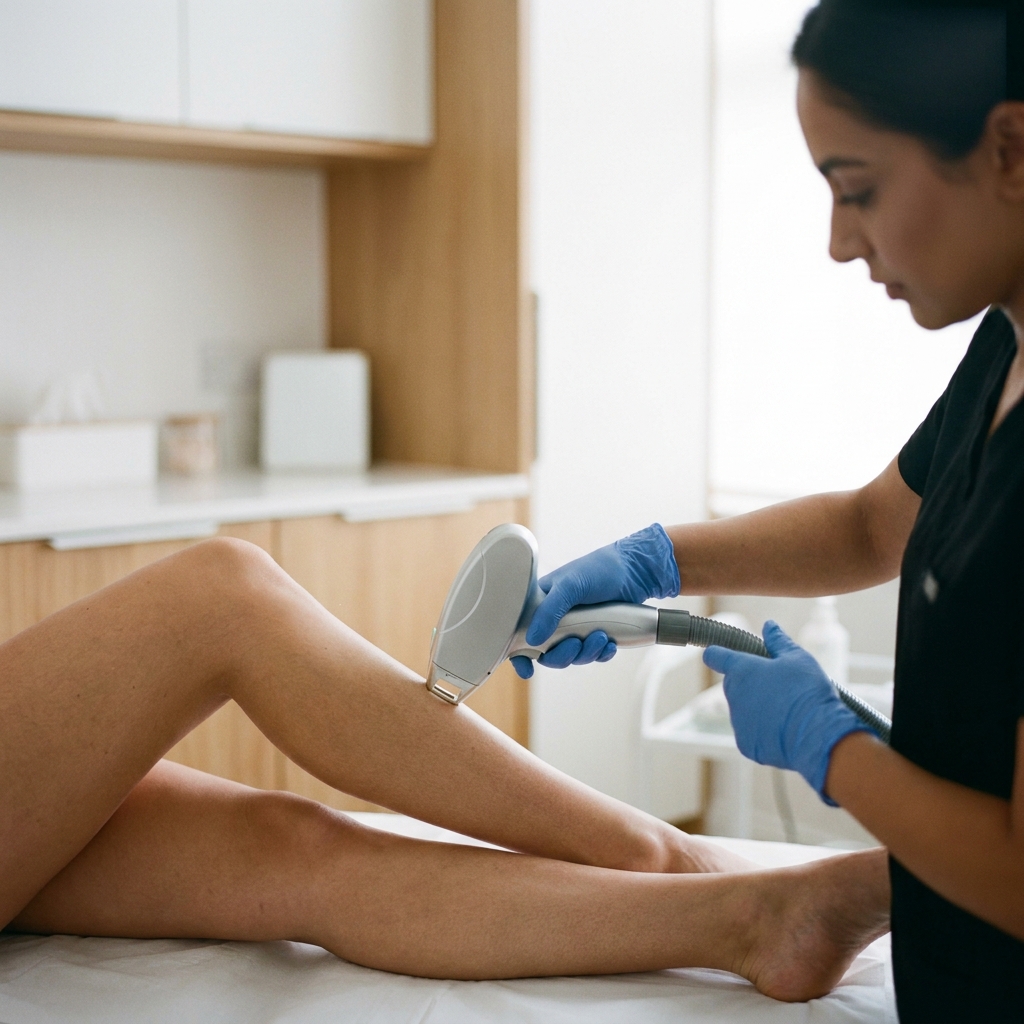
The short answer
Laser hair removal delivers long-term hair reduction — not guaranteed permanent removal of every hair. After a full course of typically six to eight sessions, most suitable people see a marked, lasting drop in hair density, with remaining hairs finer and lighter. Results build gradually because the laser only affects follicles in their active growth phase, and occasional maintenance sessions are often needed. Outcomes vary by hair colour, skin tone, hormones and the device used.
It is the question everyone asks before paying for a course: will it actually work, and will the hair stay away? The honest answer is that laser hair removal is a reduction treatment, not a one-and-done erasure. Understanding how results accumulate — and what “success” realistically looks like — helps you judge whether a course is worth it and spot a clinic over-promising.
Results at a glance
- Outcome Long-term hair reduction
- Typical course 6–8 sessions
- Spacing 4–8 weeks apart
- Visible drop Often after 2–3 sessions
- Maintenance Occasional top-ups common
- Best response Dark hair, suitable skin
Reduction, not guaranteed permanent removal
The single most important thing to understand is the wording. Laser hair removal achieves long-term hair reduction; it does not guarantee that every hair is gone forever. The NHS describes laser and IPL as cosmetic procedures that reduce unwanted hair, and is clear that hair removal is not always permanent and that the results can vary from person to person. A realistic goal is a substantial, lasting fall in the amount of hair, with whatever regrows tending to be finer, slower and lighter than it was before you started. For most suitable people that is a meaningful, life-changing result — far less shaving and waxing — but it is still a reduction, not an erasure.
Why the caveat? Hair grows in cycles, and the laser only meaningfully damages a follicle when the hair is in its active (anagen) growth phase. At any moment only a share of your follicles are in that phase, so a single session can never reach them all. That is why a course is spread over several months — to catch successive waves of growing hairs — and why dormant follicles can later be triggered to produce new hair, especially where hormones drive growth. Understanding this cycle is the key to judging results fairly: you are aiming for a steady decline across a course, not a dramatic overnight change.
The typical timeline
Most people do not see the full picture until the course is well underway. After the first session, treated hairs often shed over the following one to three weeks, which can look like fresh regrowth but is actually the dead hair working its way out of the follicle. Density usually starts to visibly drop after the second or third session, and continues improving across the course. It pays to be patient and to keep to your clinic’s schedule rather than judging the whole treatment on the first appointment.
| Stage | What you typically notice |
|---|---|
| After session 1 | Treated hairs shed; little density change yet |
| Sessions 2–3 | Patchier regrowth, finer hairs, slower return |
| Sessions 4–6 | Marked reduction in most suitable areas |
| After the course | Long-term reduction; occasional maintenance |
A course is commonly six to eight sessions, spaced four to eight weeks apart, though some people need more — particularly on the face or where hormones are involved. See how many sessions you might need for area-by-area detail. The interval between sessions is deliberate: too close together and you waste a visit on follicles that are not yet in their active phase; too far apart and growth re-establishes. A good practitioner times the gaps to the area being treated and adjusts as your hair thins.
What affects the result you get
- Hair colour: dark, coarse hair responds best because the laser targets melanin; blonde, grey, red or white hair responds poorly.
- Skin tone: the right device and settings matter for safety and effectiveness across different skin tones.
- Hormones: conditions such as PCOS can drive new growth, so maintenance is more likely.
- Area treated: some areas clear more readily than others.
- Course completion and spacing: finishing the course and keeping to the schedule strongly influences the outcome.
Maintaining your result
After a successful course, many people enjoy long stretches with very little hair, then book an occasional maintenance session if some growth returns — perhaps once or twice a year, or less often than that. This is entirely normal and not a sign that the treatment has failed. Protecting treated skin from the sun, avoiding self-tan, and following aftercare all help keep results looking their best between visits. Some people never need a top-up; others, particularly where hormones are at play, return more regularly. Either pattern is within the normal range and is best planned with your practitioner rather than assumed in advance.
If you are seeing little change after several sessions, that warrants a conversation rather than just more treatment — the cause might be hair colour, settings, spacing or a hormonal driver. Our page on why laser hair removal might not be working walks through the common reasons.
This page is general information, not medical advice. Suitability, expected results and any skin concern should be assessed by a qualified practitioner during a consultation and patch test, because outcomes genuinely vary from person to person.
Frequently asked questions
Is laser hair removal permanent?
No treatment can guarantee permanent removal of every hair. Laser achieves long-term reduction; whatever regrows is usually finer and sparser, and occasional maintenance is common. See our page on whether it is permanent.
How soon will I see results?
Treated hairs shed within a few weeks of the first session, and most people notice a real drop in density after the second or third session, improving across the full course.
Why do I still have some hair after a full course?
Hair grows in cycles and only follicles in their active growth phase are affected, so some regrowth is normal. Hormones can also drive new growth, which is why maintenance sessions exist.
Do results vary between people?
Yes. Hair colour, skin tone, hormones, the area and the device all affect the outcome, so a patch test and consultation are essential to set individual expectations.
Sources & further reading
- NHS — Cosmetic procedures: laser hair removal and IPL
- MHRA — Lasers, intense light source systems and LEDs: guidance for cosmetic use
- Healthcare Improvement Scotland — Regulation of independent clinics
- JCCP — Standards for laser and IPL hair removal practitioners
This guide is general information, not medical advice. A patch test and consultation with a qualified, regulated practitioner are essential before treatment, and results vary by individual. Laser achieves long-term hair reduction, not guaranteed permanent removal of every hair. Discuss any skin or health concerns with the practitioner or your GP.