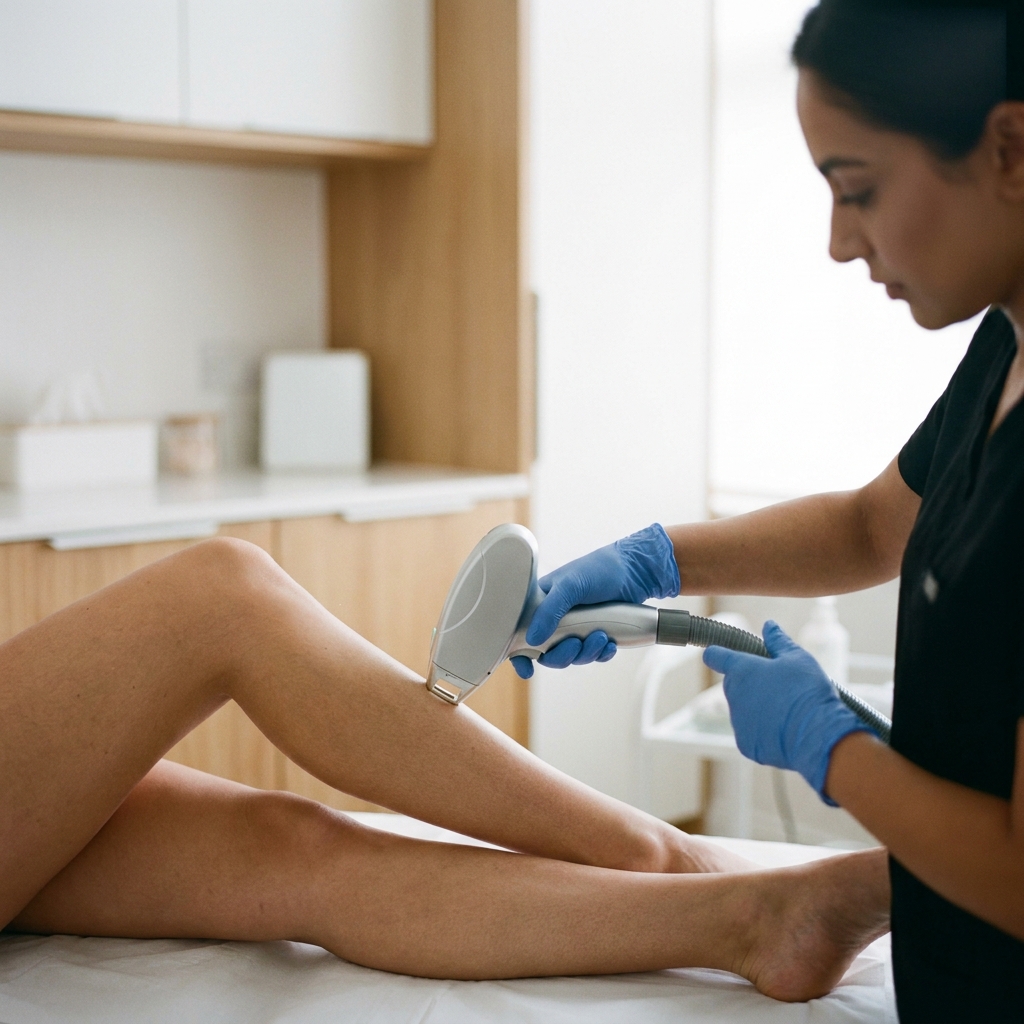
The short answer
Burns are an uncommon but recognised risk of laser hair removal, usually caused by incorrect settings, an untrained operator, or treating tanned or darker skin with an unsuitable device. They range from superficial redness to blistering and, rarely, scarring or lasting pigment change. The risk is greatly reduced by a proper skin-type assessment, a patch test, skin cooling and a qualified, regulated practitioner. If a burn occurs, treat it as a skin injury and seek medical advice promptly.
Because laser hair removal deliberately heats the skin to target hair follicles, there is always a small possibility of a burn if too much energy reaches the surrounding skin. In competent, regulated hands this is uncommon, but it is one of the most important risks to understand — both so you can choose a safe clinic and so you know what to do if it happens. This page explains why burns occur, who is most vulnerable and how good practice prevents them.
Burns at a glance
- Frequency Uncommon with competent treatment
- Main causes Wrong settings, untrained operator
- Higher risk Tanned skin, darker skin with wrong device
- Severity range Redness to blistering; rarely scarring
- Prevention Patch test, skin-type match, cooling
- If it happens Cool it, do not pop blisters, seek advice
Why do laser burns happen?
The laser works by heating the melanin (pigment) in the hair. If the energy is set too high for the skin, if the device is unsuitable for the skin tone, or if the operator misjudges the treatment, too much heat can reach the skin surface and burn it rather than staying concentrated in the follicle. The main contributors are well recognised:
- Incorrect energy settings for the individual’s skin tone and hair type.
- An untrained or inexperienced operator who cannot judge the right parameters or read the skin’s response.
- Tanned skin, where extra melanin in the surface absorbs energy that was meant for the follicle.
- Darker skin treated with the wrong laser — older or unsuitable devices are riskier; an Nd:YAG laser is generally safer for darker tones.
- Inadequate cooling of the skin during treatment, leaving the surface unprotected.
- Skipping the patch test, so an unsafe setting is not picked up before a full area is treated.
Who is most at risk?
Anyone can be burned if treatment is done badly, but the risk is clearly higher for people with tanned skin and for darker skin tones treated with an unsuitable device or by an inexperienced operator. This is exactly why a careful skin-type assessment is essential — see laser hair removal on different skin tones — and why avoiding sun, sunbeds and fake tan beforehand matters so much. People who have recently been on holiday or used a self-tan are a common group who should wait.
| Risk factor | Why it raises burn risk |
|---|---|
| Recent tan / sunbed | Surface melanin absorbs laser energy |
| Fake tan on skin | Pigment on the surface heats up |
| Unsuitable device for skin tone | Energy not safely targeted |
| Untrained operator | Settings misjudged |
| No skin cooling | Surface not protected |
How burns are prevented
Good practice removes most of the risk, which is why the practitioner you choose matters more than almost anything else:
- A consultation and patch test to confirm safe settings before a full session.
- Matching the device and energy carefully to your skin tone and hair type.
- Effective cooling of the skin during every pulse.
- Avoiding sun, sunbeds and fake tan before treatment — see sun exposure.
- Choosing a qualified, regulated practitioner — see is my technician qualified?
- Speaking up during the session if anything feels like a sharp, burning pain rather than a brief snap.
Most everyday side effects are mild and temporary; the wider picture is set out on our side effects page, while normal redness and bumps are covered under skin reactions.
How serious can a laser burn be?
Most reactions that people loosely call “burns” are superficial: redness and tenderness that settle within a day or two with simple care. A true burn is less common and ranges from a superficial injury that heals without lasting marks, to a deeper one that can blister and, rarely, scar or leave a lasting change in skin colour. The face and other visible areas are understandably more concerning if affected. The reassuring point is that serious burns are uncommon when treatment is competently delivered with a suitable device, correct settings and proper cooling — the steps above are what keep the risk low. If you are choosing between providers, treat a clinic’s willingness to patch test and assess your skin tone as a sign of good practice.
What to do if a burn occurs
If the skin blisters or you think it has been burned, treat it as you would any burn: cool it under cool (not ice-cold) running water for around twenty minutes, keep it clean, do not burst any blisters, and cover loosely if needed. Contact your practitioner and seek medical advice from a pharmacist, GP or NHS 111; go to urgent care for a large, deep, or infected burn, or one on the face. Report it to the clinic so they can review what happened and adjust future treatment. This page is general information, not medical advice; individual reactions vary, so a consultation and patch test with a qualified, regulated practitioner are essential before treatment.
Frequently asked questions
How common are burns from laser hair removal?
They are uncommon when treatment is carried out competently with a suitable device and correct settings. The risk rises sharply with tanned skin, unsuitable devices or untrained operators.
Can I have laser if I have a tan?
No — a responsible practitioner will postpone treatment until a tan, sunburn or fake tan has fully faded, because tanned skin greatly increases the burn risk.
What should I do if I get a burn after a session?
Cool it under cool running water, keep it clean, do not pop any blisters, and seek advice from a pharmacist, GP or NHS 111. Tell your clinic, and go to urgent care for a large or deep burn.
Will a burn leave a scar?
Most superficial reactions heal without scarring, but deeper burns can scar or cause lasting pigment change. Prompt, careful wound care and medical advice reduce that risk.
Sources & further reading
- NHS — Burns and scalds: treatment and when to get help
- NHS — Laser hair removal risks
- MHRA — Safety of cosmetic laser and IPL devices
- British Medical Laser Association (BMLA) — laser safety standards
This guide is general information, not medical advice. A patch test and consultation with a qualified, regulated practitioner are essential before treatment, and results vary by individual. Laser achieves long-term hair reduction, not guaranteed permanent removal of every hair. Discuss any skin or health concerns with the practitioner or your GP.