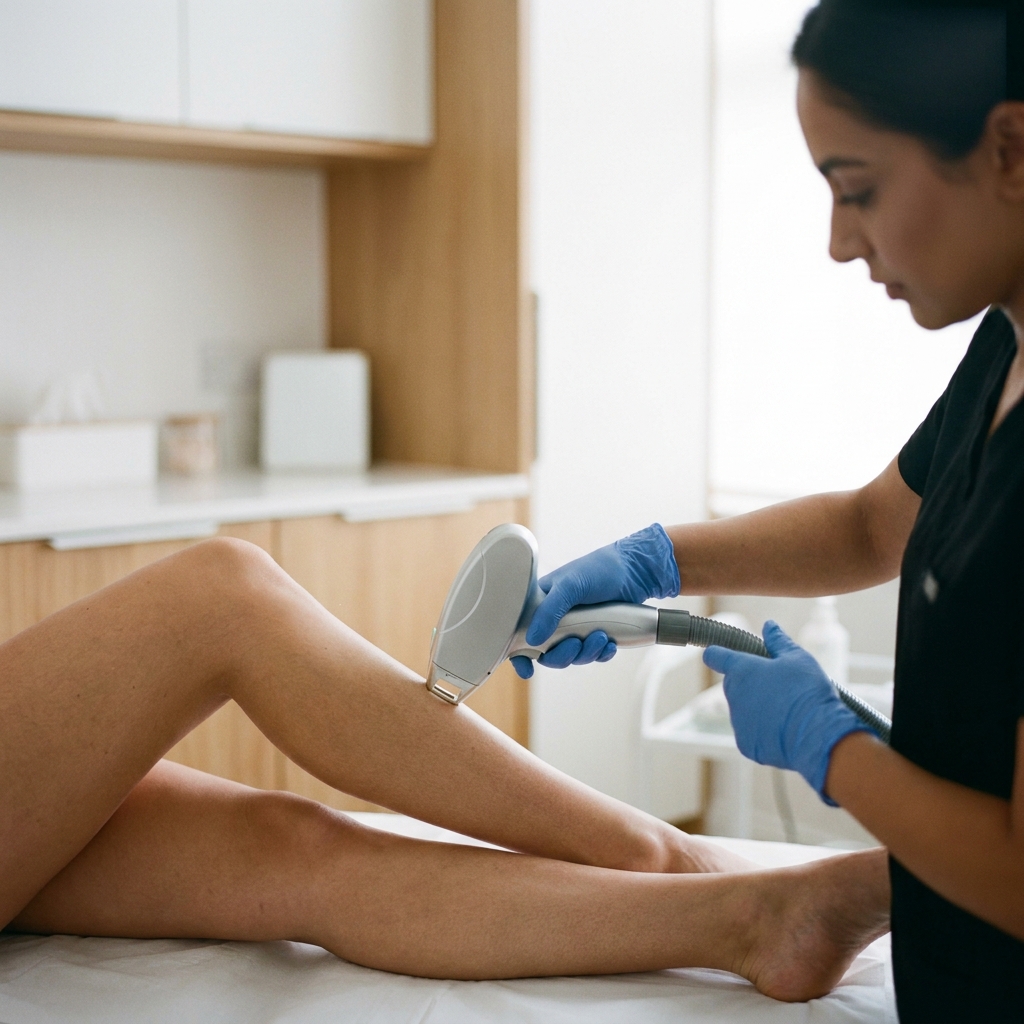
The short answer
Mild redness and small raised bumps around the follicles are normal and usually fade within hours to a day or two. Other reactions — folliculitis, temporary darkening or lightening of the skin, or rarely a flare of cold sores or an unusual sensitivity reaction — are less common and can take longer to settle. Because skin reactions are individual and depend on skin type, any reaction that is severe, spreading or not settling should be assessed by a qualified, regulated practitioner or a GP.
Some reaction to laser hair removal is expected — the skin has just been heated. The key is knowing the difference between the normal, short-lived response and a reaction that warrants attention. This page describes the common skin reactions, the less common ones, and the factors (skin tone, sun exposure, sensitive areas) that make them more likely, so you know what to watch for and when to ask for help.
Skin reactions at a glance
- Normal Redness, small follicle bumps
- Settles in Hours to a day or two
- Less common Folliculitis, pigment change
- Rare Cold-sore flare, blistering
- More likely on Tanned, sensitive or darker skin
- Get checked if Severe, spreading or not settling
Normal, expected reactions
Some reaction to laser hair removal is expected, because the skin has just been heated to target the hair follicles. Straight after a session it is normal to see:
- Redness (erythema) across the treated area, which can look like a flush or mild blush.
- Perifollicular oedema — tiny raised bumps around each follicle, which actually show the laser has targeted the hairs as intended.
- A warm, mild-sunburn feeling for a few hours after the appointment.
- Light itching as the skin settles, which gentle moisturising usually relieves.
These reactions usually fade within hours to a day or two, and are eased by cooling and gentle aftercare. They are a normal part of treatment rather than a sign that something has gone wrong, and many people have nothing more than a brief flush.
Less common reactions
A smaller number of people notice stronger or longer-lasting reactions. These are not the typical outcome, but it helps to recognise them:
| Reaction | What it is |
|---|---|
| Folliculitis | Inflamed, sometimes spotty follicles |
| Hyperpigmentation | Patches of darker skin |
| Hypopigmentation | Patches of lighter skin |
| Cold-sore flare | Can be triggered around the mouth in those prone to them |
| Crusting / blistering | Sign of a stronger reaction — get it checked |
Pigment changes are more likely on tanned or darker skin, particularly with an unsuitable device, which is why skin tone is assessed so carefully — see different skin tones. They are usually temporary but can take weeks, occasionally longer, to settle. Stronger reactions such as crusting or blistering overlap with the territory of burns and should always be assessed.
What makes a reaction more likely?
Several factors raise the chance of a stronger reaction, and most of them can be managed in advance:
- Recent sun, sunbeds or fake tan — the single biggest avoidable factor; see sun exposure.
- Skin tone and device mismatch — the wrong laser for your skin raises the risk of pigment change.
- Sensitive areas such as the face and bikini line, where the skin reacts more readily.
- Certain medicines and conditions that increase light sensitivity — disclose these so suitability can be assessed before treatment.
- Aggressive settings or a missed patch test, which is why competent practice and a test patch matter.
How long do skin reactions take to settle?
The everyday reactions — redness, follicle bumps and warmth — usually settle within hours to a day or two. Folliculitis tends to calm down over a few days with gentle care. Pigment changes are the slowest to resolve and can take weeks, occasionally longer, which is why protecting the area from the sun afterwards is so important. The shedding of treated hairs over the following one to two weeks is part of the normal process rather than a reaction, and our healing timeline sets out what to expect day by day. If a reaction is taking much longer than this to improve, or is getting worse rather than better, it is worth having it looked at rather than waiting.
When to get a reaction checked
Contact your practitioner or a GP if a reaction is severe, painful, spreading, blistering, weeping, showing signs of infection, or if pigment changes are not settling over time. A patch test before your first full session is the best way to predict how your skin will respond and to adjust the settings accordingly. This page is general information, not medical advice. Skin reactions are individual and depend on your skin type, so suitability and any reaction must be assessed by a qualified, regulated practitioner, with results varying from person to person.
Frequently asked questions
Are bumps after laser hair removal normal?
Yes — small raised bumps around the follicles (perifollicular oedema) are a normal sign the laser has targeted the hairs, and they usually settle within hours to a day or two.
Why has my skin gone darker after laser?
Temporary darkening (hyperpigmentation) can follow treatment, especially on tanned or darker skin. It usually fades but can take weeks; tell your practitioner and protect the area from the sun.
Can laser hair removal trigger a cold sore?
In people prone to cold sores, facial treatment around the mouth can sometimes trigger a flare. Mention any history of cold sores at your consultation so it can be managed.
How do I know if a reaction is serious?
Severe, spreading, blistering, weeping or infected-looking reactions, or pigment changes that are not settling, should be assessed by your practitioner or a GP rather than left.
Sources & further reading
- NHS — Laser hair removal: side effects and risks
- NHS — Skin pigmentation changes
- MHRA — Cosmetic laser and IPL device safety
- JCCP — Patient assessment and contraindication guidance
This guide is general information, not medical advice. A patch test and consultation with a qualified, regulated practitioner are essential before treatment, and results vary by individual. Laser achieves long-term hair reduction, not guaranteed permanent removal of every hair. Discuss any skin or health concerns with the practitioner or your GP.