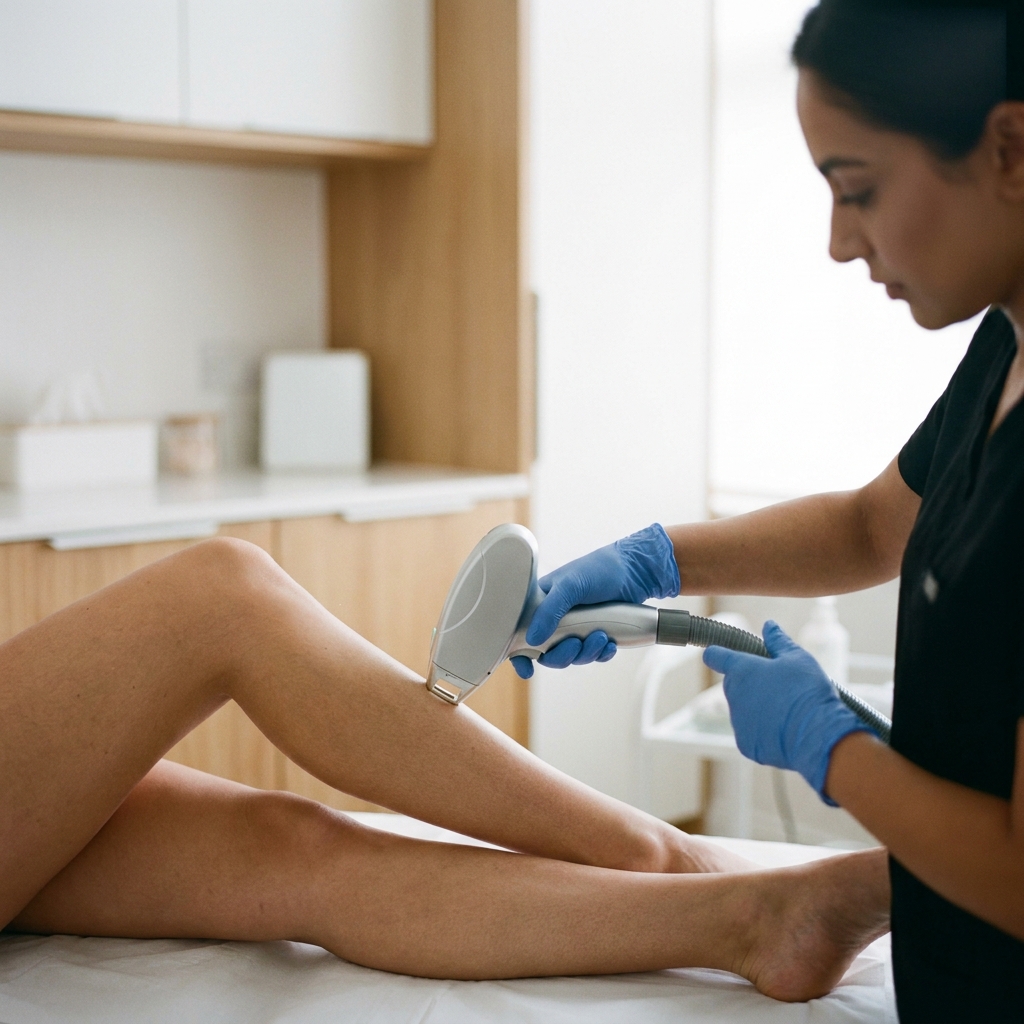
The short answer
Avoid sun, sunbeds and fake tan before and after laser hair removal — tanned skin significantly raises the risk of burns and pigment changes. The laser targets pigment, so extra melanin in tanned skin absorbs energy meant for the follicle. Most clinics ask you to keep treated areas out of strong sun, avoid sunbeds for several weeks, and wear daily SPF. This is a key safety point, not an optional extra, so plan your course around it and follow your practitioner’s timing.
Of all the practical rules around laser hair removal, sun avoidance is one of the most important — and one of the most often overlooked. Because the laser works by targeting melanin, a tan changes how your skin responds and raises the risk of burns and lasting pigment changes. This page explains why, what to avoid and for how long, and how to protect your skin so treatment stays safe and effective.
Sun exposure at a glance
- Avoid before Sun, sunbeds, fake tan
- Avoid after Strong sun on treated areas
- Why Tanned skin raises burn & pigment risk
- Protect with Daily broad-spectrum SPF
- Fake tan Must fully fade before treatment
- Plan around Holidays and sunny weeks
Why does sun exposure matter so much?
The laser works by targeting the melanin (pigment) in the hair. A tan adds extra melanin to the surface of the skin, so that pigment now competes for and absorbs energy that should be reaching the follicle. The result is a higher risk of burns and of pigment changes — patches of darker or lighter skin that can take weeks to settle. Freshly treated skin is also temporarily more vulnerable to ultraviolet light, so strong sun afterwards can trigger the same problems. This is why responsible clinics will not treat tanned skin and will ask you to protect the area carefully afterwards. It is one of the most important safety rules around the whole procedure, not a minor detail.
What to avoid, and when
- Before treatment: avoid sunbathing, sunbeds and fake tan, and let any existing tan or fake tan fully fade before your session.
- After treatment: keep treated areas out of strong sun, avoid sunbeds, and protect exposed skin with SPF while it settles.
- Throughout a course: plan around holidays, as a tan picked up part-way through can mean a session has to be postponed.
| Exposure | Why it’s a problem |
|---|---|
| Sunbathing / strong sun | Tans the skin, raising burn and pigment risk |
| Sunbeds | Same risk, plus general skin-cancer risk |
| Fake tan | Adds surface pigment that heats up |
| Recent sunburn | Damaged skin must heal first |
How to protect your skin
Protecting the skin is straightforward, but it has to be done consistently to be effective:
- Wear daily broad-spectrum SPF on treated areas that will see daylight, and reapply as the product directs.
- Cover up with clothing or shade where you can, especially in the days after a session.
- Skip sunbeds entirely — they carry their own serious health risks as well as undermining treatment.
- Let any tan fade before your next session, and tell your practitioner honestly if you have caught the sun.
For wider recovery advice see our aftercare guide; for how this fits into overall safety see is laser hair removal safe?; and for why darker or tanned skin needs the right device, see different skin tones.
Why tanned and darker skin needs extra care
It is worth being clear that the issue is the amount of pigment in the surface skin at the time of treatment, not skin colour in itself. A tan temporarily raises that surface pigment in anyone, which is why even people who normally treat easily should let a tan fade first. Naturally darker skin can be treated safely, but it requires a device suited to the skin tone — commonly an Nd:YAG laser — and an experienced practitioner who sets the energy appropriately. The combination most likely to cause harm is darker or tanned skin treated with an unsuitable device or aggressive settings. A proper skin-type assessment at your consultation is how a good clinic manages this, so be honest about recent sun and any holidays coming up.
Planning your course around the sun
Because sun avoidance applies both before and after each session, many people plan their course for the autumn and winter months, or schedule carefully around holidays so that no session falls too close to a sunny trip. If you have booked a sunny break, tell your clinic in advance so sessions can be timed safely on either side of it. This page is general information, not medical advice; how your skin reacts to sun and laser is individual, so follow your practitioner’s timing and have a consultation and patch test before starting.
Frequently asked questions
How long should I avoid the sun before laser hair removal?
Clinics typically ask you to avoid sun, sunbeds and fake tan for several weeks beforehand and to let any tan fully fade. Follow your practitioner’s specific timing, as it depends on your skin.
Can I have laser hair removal if I have a tan?
No — a responsible practitioner will postpone treatment until a tan, sunburn or fake tan has fully faded, because tanned skin raises the risk of burns and pigment changes.
Do I need to wear sunscreen after treatment?
Yes. Freshly treated skin is more prone to pigment changes from ultraviolet light, so apply a high-factor broad-spectrum SPF to treated areas that will see daylight and avoid strong sun.
Why does the sun affect laser hair removal at all?
The laser targets pigment. A tan adds pigment to the skin surface, so it absorbs energy meant for the follicle, increasing the risk of burns and uneven skin colour.
Sources & further reading
- NHS — Sunscreen and sun safety
- NHS — Laser hair removal: precautions and what to consider
- NHS — Sunbeds and skin cancer risk
- MHRA — Cosmetic laser and IPL device safety guidance
This guide is general information, not medical advice. A patch test and consultation with a qualified, regulated practitioner are essential before treatment, and results vary by individual. Laser achieves long-term hair reduction, not guaranteed permanent removal of every hair. Discuss any skin or health concerns with the practitioner or your GP.