The short answer
Results depend on hair colour and thickness, skin tone, hormones, the area treated, the device, the practitioner’s skill, the number and spacing of sessions, sun exposure and certain medications. Dark, coarse hair on suitable skin responds best. Some factors are fixed, but completing the course, keeping to the schedule, avoiding sun and choosing a skilled practitioner are all within your control and strongly influence the outcome.
Two people can have the same number of laser sessions and very different results. That is because laser hair removal is shaped by a web of factors — some about your biology, some about the treatment, and some about what you do around it. Knowing them helps you set realistic expectations and improve your odds of a good outcome.
Key factors at a glance
- Hair colour Dark responds best; light/grey poorly
- Hair thickness Coarse hair responds better
- Skin tone Affects safe device and settings
- Hormones Can drive ongoing regrowth
- Sessions Number and spacing matter
- Sun & meds Both affect safety and results
Factors about you
The biggest determinant is hair colour. Laser targets melanin, so dark, pigmented hair responds best, while blonde, red, grey and white hair responds poorly. Hair thickness matters too: coarse hair generally responds better than fine, downy hair. Your skin tone influences which device and settings are safe and effective — modern Nd:YAG lasers, for instance, can treat darker skin more safely. Our page on different skin tones covers this.
Hormones are a major factor: conditions such as PCOS continually stimulate follicles, so results are slower and maintenance more frequent. The area treated also varies — some areas clear more readily than others, and hormonally sensitive areas like the face can be stubborn, while larger areas such as the legs simply take longer per session. None of these biological factors can be changed, but knowing them upfront lets a good practitioner predict, at the consultation, roughly how your hair is likely to behave and how many sessions you may realistically need.
Factors about the treatment
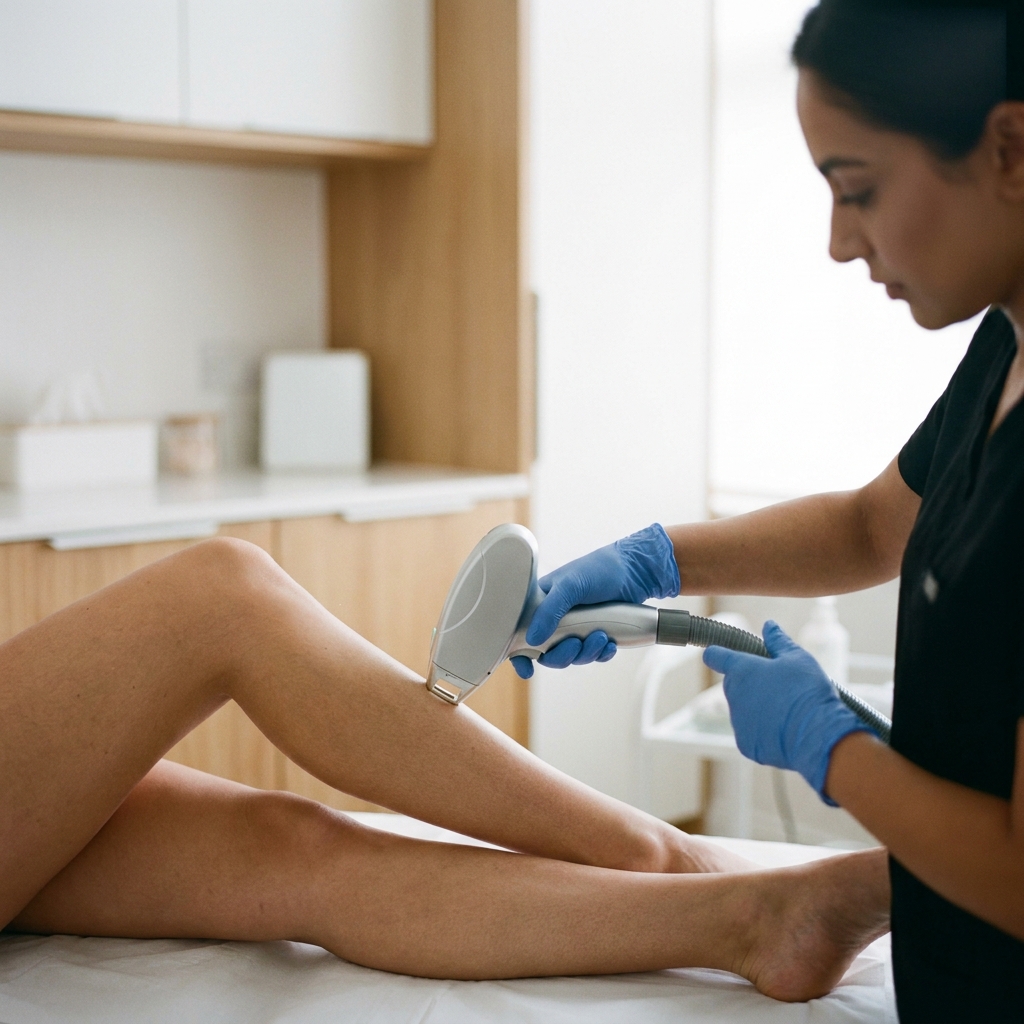
The device and its settings must match your hair and skin; the wrong choice or overly low energy can blunt results, while settings that are too high risk burns and pigment changes, so there is a balance to strike. The practitioner’s skill — correct device selection, appropriate settings and full, even coverage with no missed patches — makes a real difference, which is why choosing a qualified clinic matters more than choosing the cheapest one. The number of sessions and their spacing are crucial: a typical course is six to eight sessions, four to eight weeks apart, timed to the hair-growth cycle so successive waves of growing hair are caught. Stopping the course early, or letting the gaps drift too long, is one of the most common reasons a treatment under-delivers.
| Factor | Within your control? |
|---|---|
| Hair colour & thickness | No — but affects suitability |
| Skin tone | No — guides device choice |
| Hormones | Partly — via GP management |
| Completing the course | Yes |
| Keeping to spacing | Yes |
| Avoiding sun & self-tan | Yes |
| Choosing a skilled clinic | Yes |
Factors around the treatment
- Sun exposure and tanning: tanned skin is less safe to treat and may force lower, less effective settings — see sun exposure.
- Hair removal between sessions: shave only — waxing or plucking removes the follicle target, undermining the laser.
- Medication: some medicines increase light sensitivity; always disclose them at consultation.
- Aftercare: following aftercare properly protects both the results and the skin between sessions.
Putting it together
You cannot change your hair colour or skin tone, but you can stack the controllable factors in your favour: choose a qualified practitioner with the right device, complete the full course, keep to the spacing, shave (not wax) between sessions, avoid sun and self-tan, and disclose medication. Do that, and a suitable candidate gives themselves the best chance of a strong, long-term reduction. If results still disappoint, work through why it might not be working.
It is the interaction of all these factors, rather than any single one, that decides your outcome — which is exactly why two people with the same number of sessions can end up in very different places. This page is general information, not medical advice. A qualified practitioner should assess all of these factors for you at a consultation and patch test before you start, and results vary considerably between individuals — the goal throughout is long-term reduction, not guaranteed permanent removal of every hair.
Frequently asked questions
What is the single biggest factor in laser results?
Hair colour. Laser targets pigment, so dark, coarse hair responds best while blonde, red, grey and white hair responds poorly. A patch test shows how your hair reacts.
Which factors can I actually control?
Completing the full course, keeping to the recommended spacing, shaving rather than waxing between sessions, avoiding sun and self-tan, disclosing medication, and choosing a skilled clinic.
Does sun exposure really affect results?
Yes. Tanned skin is less safe to treat and may require lower, less effective settings. Avoiding sun and self-tan before and after sessions protects both safety and results.
Why do hormones matter so much?
Hormonal conditions such as PCOS keep stimulating follicles, so hair returns more readily and maintenance is needed more often. Managing the cause with a GP can improve outcomes.
Sources & further reading
- NHS — Cosmetic procedures: laser hair removal and IPL
- MHRA — Lasers and IPL for cosmetic use: safety guidance
- Healthcare Improvement Scotland — Independent clinic regulation
- British Medical Laser Association — Laser hair removal practice standards
This guide is general information, not medical advice. A patch test and consultation with a qualified, regulated practitioner are essential before treatment, and results vary by individual. Laser achieves long-term hair reduction, not guaranteed permanent removal of every hair. Discuss any skin or health concerns with the practitioner or your GP.