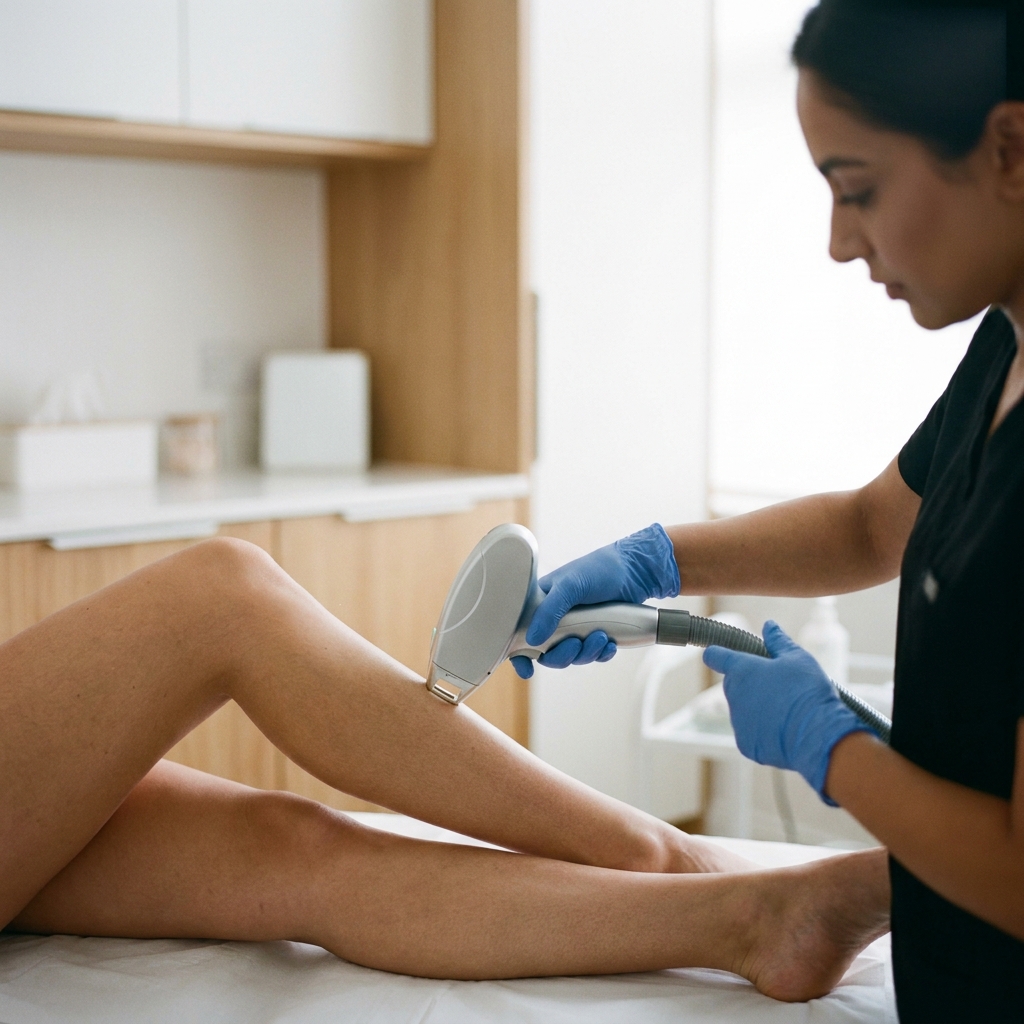
The short answer
Numbing cream can reduce discomfort on sensitive areas, but it should only be used on a practitioner’s advice and applied exactly as directed. Over-applying topical anaesthetic, covering large areas, or using it under occlusion can cause problems, so it is not something to use casually. Many people manage comfortably with skin cooling alone. Discuss whether numbing cream is appropriate for your treatment, and follow your clinic’s and the product’s instructions precisely.
Most people find laser hair removal a brief, tolerable discomfort, but sensitive areas can sting more, so numbing cream is a common question. A topical anaesthetic can take the edge off, yet it carries its own cautions if misused. This page explains when numbing cream is useful, the safety points to be aware of, and why your practitioner’s guidance — not a do-it-yourself approach — is the safe way to use it.
Numbing cream at a glance
- What it is A topical anaesthetic applied before treatment
- Best for More sensitive areas
- Use only On a practitioner’s advice
- Main caution Over-application can be harmful
- Alternative Skin cooling, often enough on its own
- Golden rule Follow instructions exactly
What does numbing cream do?
Numbing cream is a topical anaesthetic applied to the skin a little while before treatment to dull the sensation of the laser pulses. It is most often considered for more sensitive areas such as the upper lip or bikini line, where the ‘elastic band snap’ can feel sharper. It does not make treatment completely painless for everyone, and many people find that the cooling built into modern devices is enough on its own without any cream at all. Numbing cream is therefore best thought of as one comfort option among several, rather than a routine part of every session.
When might it help?
- On sensitive areas where the sensation tends to be sharper, such as the face or bikini line.
- For people who find the snapping sensation particularly hard to tolerate.
- When a practitioner specifically recommends it as part of your treatment plan.
For most other areas, such as the legs, arms and back, skin cooling alone is usually sufficient and numbing cream is not needed. Your practitioner can advise whether it is worth considering for the particular areas you are having treated.
The safety cautions
Topical anaesthetics are medicines and must be respected as such. The main risks come from using too much, applying it over a large area of skin at once, or covering it with wrapping to increase absorption — all of which can lead the body to take in more of the anaesthetic than is safe. In rare cases, misuse of strong topical anaesthetics has caused serious effects. For this reason numbing cream should only be used on a practitioner’s advice and applied exactly as directed, never improvised at home in larger amounts.
| Do | Avoid |
|---|---|
| Use only if advised | Self-prescribing or over-buying |
| Apply the stated amount | Slathering on extra “to be sure” |
| Treat one area as directed | Covering large areas at once |
| Follow timing instructions | Leaving it on too long or under wrapping |
Alternatives and good practice
Often the simplest comfort measures work well, so it is worth trying these before relying on a topical anaesthetic:
- Skin cooling — chilled air or a contact cooling tip eases most of the discomfort and protects the skin.
- Correct settings — a well-matched device is more comfortable and also reduces burn risk.
- Timing sessions to avoid the most sensitive days of your cycle for delicate areas.
- Building up over a course — many people find later sessions more comfortable as the hair thins.
Does numbing cream affect how well the laser works?
Used correctly and only where advised, numbing cream is intended to ease the sensation without changing the treatment itself, because the laser still reaches and heats the hair follicles as normal. The concern is not effectiveness but safety: applying it too thickly, over too large an area, or for too long is where problems arise. There is also a practical point — if cream is applied unevenly it can make the skin feel different in different spots, so your practitioner may prefer to manage comfort with cooling instead. The sensible approach is to treat numbing cream as something your clinic controls and advises on, not a do-it-yourself addition you bring along. If you are anxious about discomfort, raise it early so a plan can be agreed before the day of treatment.
Raise numbing cream at your consultation and patch test so your practitioner can advise whether it is appropriate and, if so, exactly how and when to use it. This page is general information, not medical advice — topical anaesthetics should be used under the guidance of a qualified, regulated practitioner, and individual suitability varies from person to person.
Frequently asked questions
Is numbing cream necessary for laser hair removal?
Usually not. Many people manage comfortably with the cooling built into modern devices. Numbing cream is mainly considered for sensitive areas and only on a practitioner’s advice.
Can I buy and apply numbing cream myself?
You should only use it on a practitioner’s advice and follow the product instructions exactly. Over-applying or covering large areas can cause the body to absorb an unsafe amount.
How long before treatment is numbing cream applied?
This depends on the product and your practitioner’s instructions. Always follow the stated timing rather than guessing, and never leave it on longer than directed.
Does numbing cream affect the laser results?
Used correctly and only where advised, it is intended to ease discomfort without affecting the treatment. Misusing it, however, can cause skin problems, so follow guidance carefully.
Sources & further reading
- NHS — Local anaesthetics: safe use of topical anaesthetic products
- MHRA — Safe use of topical anaesthetic creams
- NHS — Laser hair removal: what to consider
- JCCP — Patient guidance on cosmetic procedure safety
This guide is general information, not medical advice. A patch test and consultation with a qualified, regulated practitioner are essential before treatment, and results vary by individual. Laser achieves long-term hair reduction, not guaranteed permanent removal of every hair. Discuss any skin or health concerns with the practitioner or your GP.