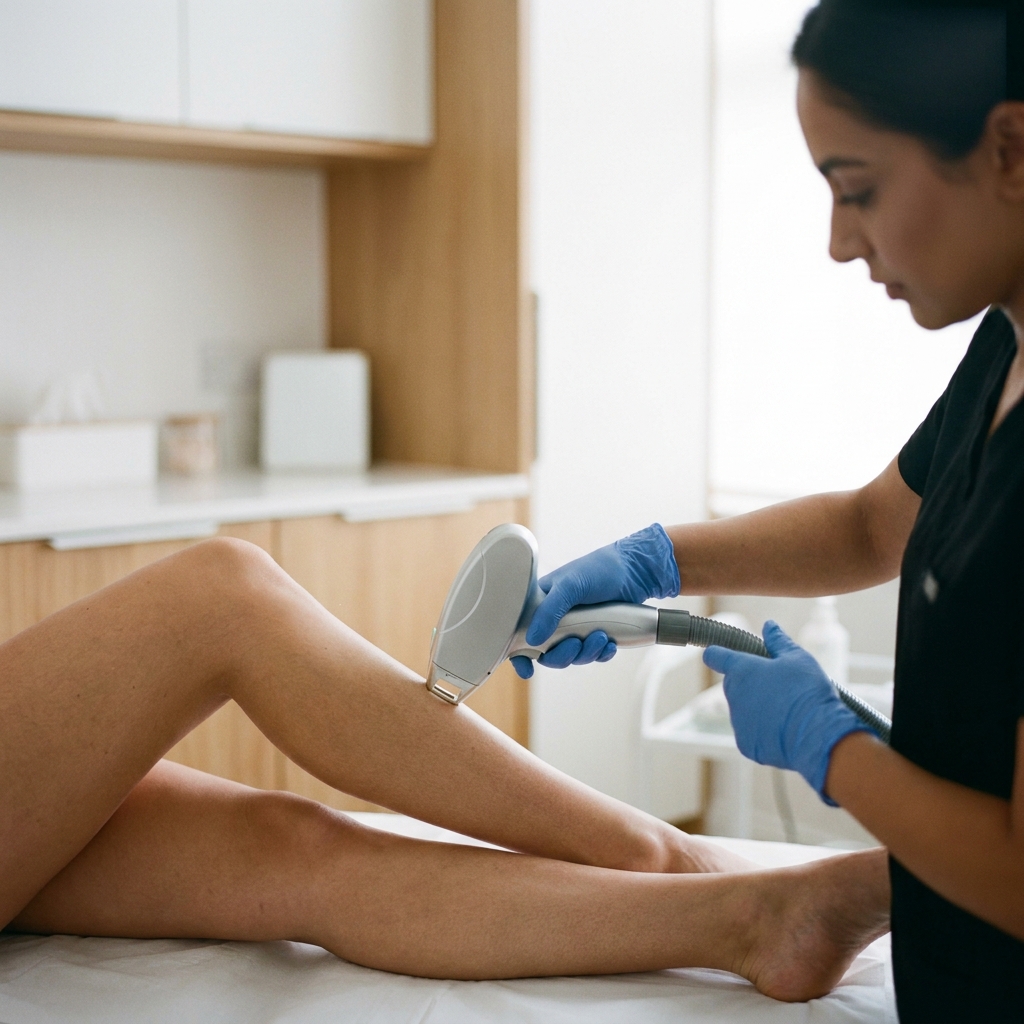
The short answer
Small facial areas such as the upper lip or chin are among the cheapest per session, often in the lower part of the roughly £50–£150 small-area range, while a full face costs more. The face is hormonally influenced, so it can need more sessions than the legs, raising the total. Facial skin is delicate, making a patch test and a qualified practitioner especially important. Prices vary by clinic and region; confirm at consultation.
Facial hair removal is one of the most common reasons people seek laser treatment, and individual facial areas are small, so the per-session price is usually modest. But the face responds differently from the body — it is hormonally driven and the skin is delicate — which affects both sessions and safety. This page covers the costs and the caveats. It is general information, not medical advice; results vary and a consultation and patch test are essential.
Facial cost at a glance
- Small areas Lower end of £50–£150 per session
- Full face More per session
- Sessions Can be more than body areas
- Why Face is hormonally influenced
- Skin Delicate — patch test vital
- Quote Varies by clinic and region
Facial laser hair removal is usually priced by sub-area — upper lip, chin, cheeks, sides of the face, or the full face. Because these areas are small, the per-session figure tends to sit at the lower end of the roughly £50–£150 small-area range, with a full face costing more. The headline price, though, is only part of the story, because the face often behaves differently from the body, both in how it responds and in how carefully it must be treated.
Why the face can cost more overall
Facial hair, particularly on the chin, jawline and upper lip, is frequently influenced by hormones. That means it can be more persistent and may need more sessions than an area such as the legs, raising the overall cost even though each session is cheap. Conditions such as PCOS can increase facial hair and the number of sessions needed — our laser hair removal for PCOS page covers this. So while the upper lip is one of the cheapest single treatments, the course total for a hormonally driven facial area can be higher than the low per-session price suggests. The number of sessions you need is set out on our how many sessions page.
- Upper lip and chin: small, quick, among the cheapest per session.
- Full face: larger, more time, higher per-session cost.
- Hormonal areas: may need more sessions and occasional maintenance.
| Facial area | Relative per-session cost |
|---|---|
| Upper lip | Lowest |
| Chin | Low |
| Full face | Higher |
Safety and suitability on the face
The face is constantly exposed to sunlight, which raises the risk of pigment changes after laser, particularly on darker skin tones. Modern Nd:YAG lasers can treat darker skin more safely, but settings must be chosen carefully by a trained practitioner. Recently tanned skin should not be treated. As with all laser hair removal, it works poorly on blonde, red, grey or white hair, which contain little pigment, so a patch test is the only reliable way to judge whether your facial hair will respond. Because the face is so visible, the consequences of a poorly performed treatment are more noticeable, which is another reason to choose a qualified practitioner rather than the cheapest deal.
Budgeting for facial treatment
Because each session is inexpensive but you may need several, budget for the whole course rather than a single visit. Ask the clinic at consultation how many sessions they expect, and whether the face is bundled into any package you are considering — some full body packages include the face, others charge for it separately. Our full body cost and cost by area pages explain how the face fits into wider pricing, and the cost overview ties the figures together.
It also helps to think about timing. Many people choose the cooler months for facial treatment, because the face is so exposed to the sun and recently tanned skin must not be lasered. Planning the course for autumn and winter means the visible areas are clear and settled before summer. Keep the treated skin protected with a high-factor sunscreen between sessions, and follow your clinic’s aftercare advice closely, as facial skin shows any irritation more readily than the body. Avoid harsh exfoliants and active skincare ingredients around the time of each session unless your practitioner advises otherwise, and never attempt to treat the eyebrows or any area too close to the eyes yourself, as the eyes need specific protection during laser treatment. This page is general information, not medical advice; results vary, and a consultation and patch test with a qualified practitioner are essential before any facial treatment.
Frequently asked questions
Is the upper lip the cheapest area?
It is one of the cheapest, because it is very small and quick to treat — usually at the lower end of the roughly £50–£150 small-area per-session range. A full face costs more.
Why might my face need more sessions than my legs?
Facial hair, especially on the chin and upper lip, is often hormonally influenced, making it more persistent. This can mean more sessions and occasional maintenance, raising the overall cost.
Is laser safe on facial skin?
It can be when done by a qualified practitioner with the right settings, but facial skin is delicate and sun-exposed. A patch test is essential, and recently tanned skin should not be treated.
Does it work on light facial hair?
Not well. Laser targets pigment, so blonde, red, grey or white facial hair responds poorly. A patch test at consultation will show whether you are likely to benefit.
Sources & further reading
- NHS — Cosmetic procedures: laser hair removal and IPL
- NHS — Polycystic ovary syndrome (PCOS): excess hair (hirsutism)
- MHRA — Lasers and intense light sources: safe use guidance
- BMLA — British Medical Laser Association patient information
This guide is general information, not medical advice. A patch test and consultation with a qualified, regulated practitioner are essential before treatment, and results vary by individual. Laser achieves long-term hair reduction, not guaranteed permanent removal of every hair. Discuss any skin or health concerns with the practitioner or your GP.