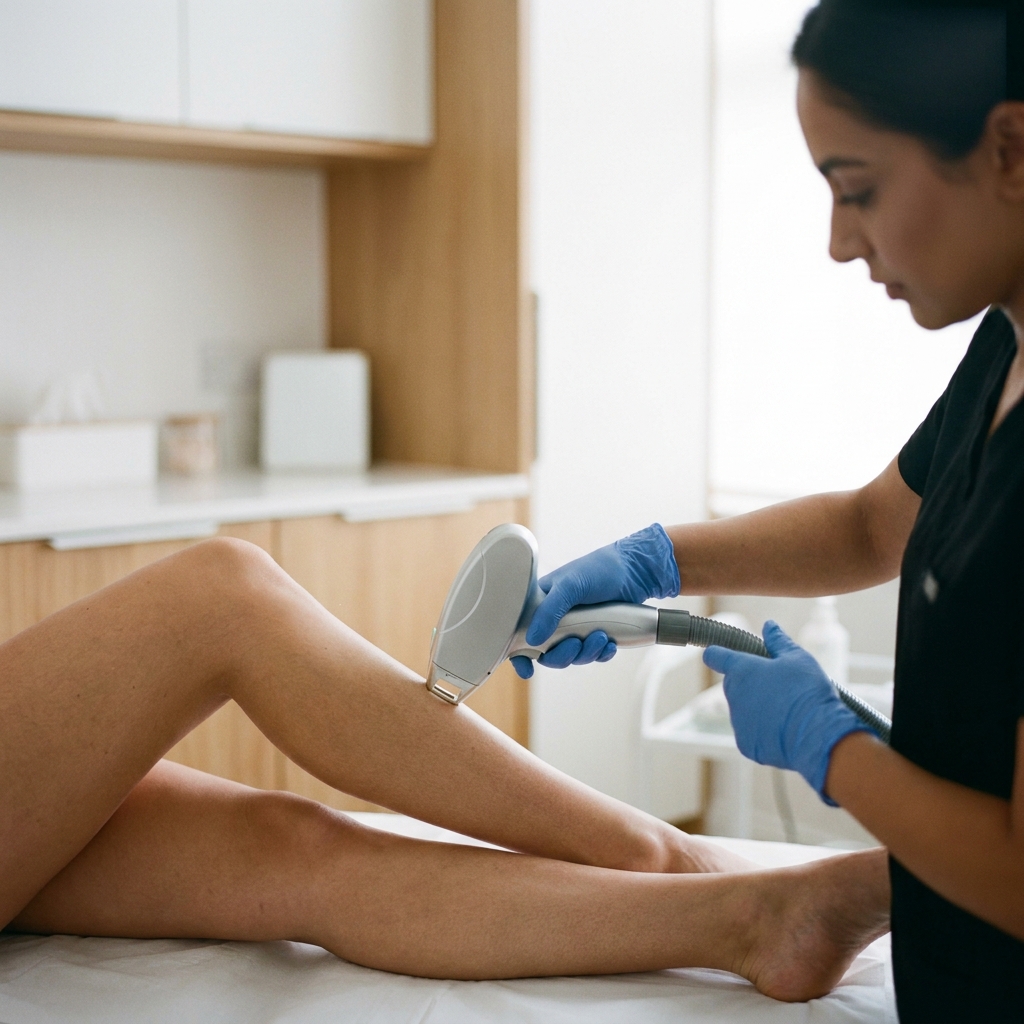
The short answer
A single session can take from a few minutes for a small area like the upper lip to an hour or more for a full body. The full course matters too: with 6–8 sessions spaced 4–8 weeks apart, a course typically spans several months to around a year. The exact timing depends on the area, your hair and how your skin responds. Occasional maintenance may follow. A practitioner will estimate both at consultation.
“How long does it take?” has two answers: how long you spend in the chair for one session, and how many months the whole course runs. This page covers both, since planning the time commitment is as important as planning the cost. It is general information, not medical advice; results vary and a consultation and patch test are essential.
Timing at a glance
- Small area session A few minutes
- Large area session Up to an hour or more
- Sessions in a course Usually 6–8
- Spacing Every 4–8 weeks
- Whole course Several months to about a year
- After Occasional maintenance
There are two timescales to think about. The first is how long a single appointment lasts. The second is how long the whole course takes from start to finish. Both depend mainly on the size of the area being treated and how your hair responds, and people who plan only for the first often underestimate the second.
How long one session takes
A single session is quick for small areas and longer for large ones. The upper lip can take only a few minutes; underarms or a bikini line, a little longer; full legs, a back, or a full body can take up to an hour or more. Modern devices with larger applicators and good cooling can speed things up considerably, treating a bigger patch of skin with each pulse. A consultation or patch test appointment is separate and is usually shorter, though it may add time on your first visit because the practitioner needs to assess your skin and hair and explain the process.
- Upper lip / chin: a few minutes.
- Underarms / bikini: roughly ten to twenty minutes.
- Full legs / back: up to an hour or more.
- Full body: the longest — see our full body cost page.
How long the whole course takes
This is the figure people underestimate. Because hair grows in cycles and the laser only affects follicles in their active growth phase, sessions are spaced weeks apart — typically 4–8 weeks — so that successive batches of hair can be caught. With 6–8 sessions at that spacing, a full course usually spans several months to around a year. Our session spacing page explains why the gaps matter and our how many sessions page covers the count. The total elapsed time is therefore far longer than the few hours you actually spend being treated.
| Area | Approx session length |
|---|---|
| Upper lip | A few minutes |
| Underarms | Around 10–20 minutes |
| Full legs | Up to an hour or more |
| Full body | The longest single appointment |
Planning the time commitment
When you book, plan for both timescales: a manageable appointment each time, and a course that runs across several months. Many people start in autumn or winter so the course finishes before summer, partly because sun-exposed and recently tanned skin should not be treated, and partly so the visible areas are clear by the warmer months. There is also a little preparation around each visit: you usually shave the area beforehand but avoid waxing or plucking, and you avoid sun exposure afterwards. Build in occasional maintenance once the course is done, since laser gives long-term reduction rather than permanent removal of every hair.
It also helps to know roughly when results appear. Most people do not see the full effect immediately; treated hairs shed over the following week or two, and the visible reduction builds gradually across the course rather than after a single session. By the time you have completed the schedule, the area should be noticeably clearer, with the hairs that do return often finer and lighter than before. Setting this expectation early prevents the disappointment of judging the treatment after one visit, and it is a useful question to raise at your consultation, where the practitioner can give you a realistic sense of how your own hair is likely to progress over the months ahead. The how many sessions and cost overview pages help you align the time and the budget. This page is general information, not medical advice; timings vary by individual, and a consultation and patch test come first.
Frequently asked questions
How long is a single laser session?
From a few minutes for a small area like the upper lip to an hour or more for a full body. Underarms or a bikini line usually take ten to twenty minutes.
How many months does a full course take?
Usually several months to around a year. With 6–8 sessions spaced 4–8 weeks apart, the course is spread out so hairs can be caught in their active growth phase.
Can I speed up the course?
Not really. The spacing between sessions is set by the hair growth cycle; shortening it reduces results. The course is meant to span months.
Will I need appointments after the course?
Possibly occasional maintenance sessions, since laser gives long-term reduction rather than permanent removal of every hair. These are usually brief and booked individually.
Sources & further reading
- NHS — Cosmetic procedures: laser hair removal and IPL
- MHRA — Lasers and intense light sources: guidance on safe use
- BMLA — British Medical Laser Association clinical guidance
- JCCP — Standards for cosmetic practitioners
This guide is general information, not medical advice. A patch test and consultation with a qualified, regulated practitioner are essential before treatment, and results vary by individual. Laser achieves long-term hair reduction, not guaranteed permanent removal of every hair. Discuss any skin or health concerns with the practitioner or your GP.